




What's Happening?
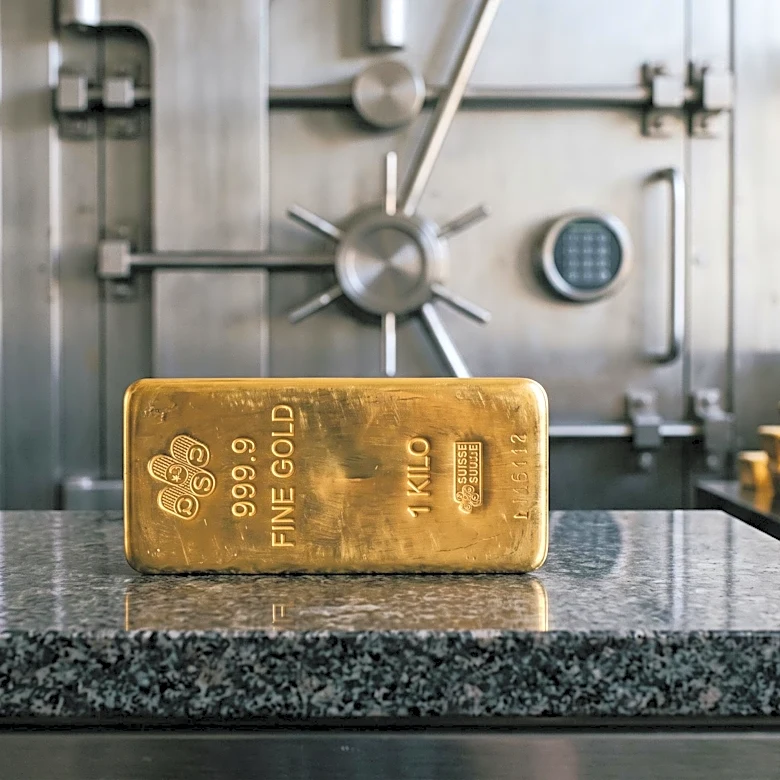
Gold futures have experienced a significant downturn, falling 27% from their record high of $5,318.40 per ounce on January 29, 2026. On October 30, 2026, gold futures dropped 3.6% to $3,884.90 per ounce, marking its second consecutive monthly decline
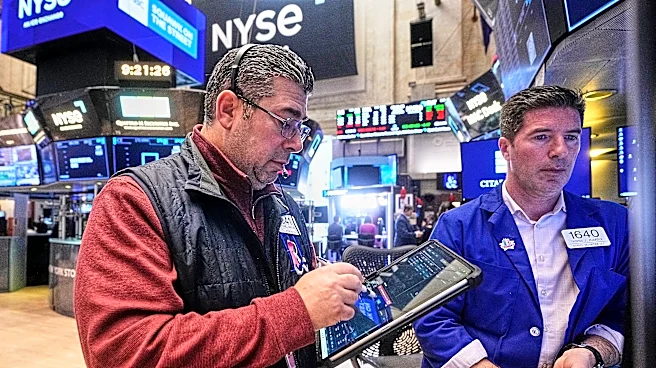
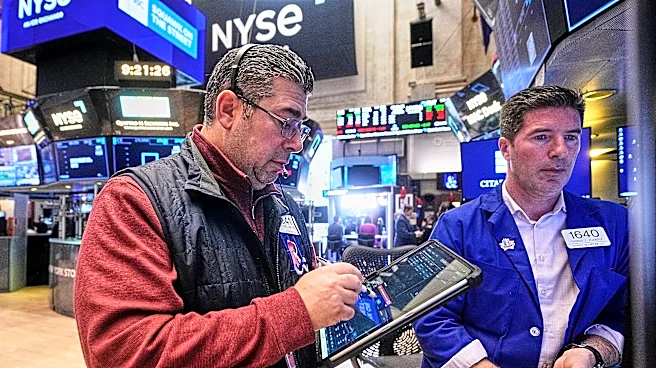
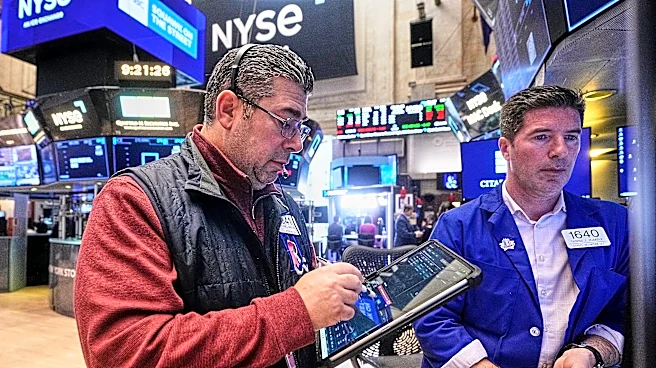
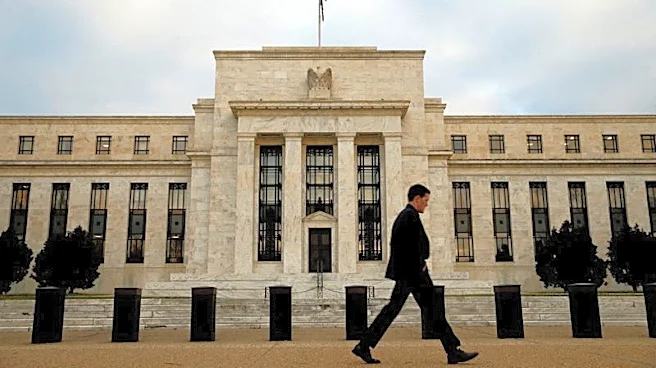
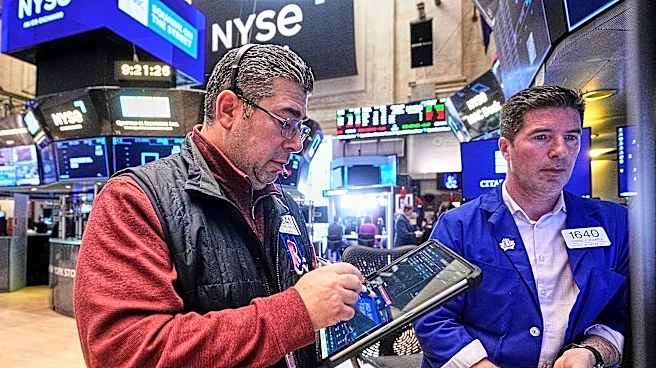
with a 7.2% loss in October. This decline coincides with a volatile period for the U.S. stock market, which saw its worst day since June on October 30, 2026, with the Nasdaq falling 2.86% and the S&P 500 down 1.82%. The primary driver for gold's fall is attributed to expectations of further interest rate hikes by the Federal Reserve, fueled by rising oil prices. Historically, gold has often fallen alongside stocks during the acute phase of a market crash, only proving its safe-haven value later when central banks cut rates.
Why It's Important?
The substantial decline in gold prices, coupled with U.S. stock market volatility, has significant implications for investors and the broader U.S. economy. Gold's traditional role as a safe haven asset during economic uncertainty is being challenged, as it has not provided protection in the current market downturn. This shift could lead investors to re-evaluate their portfolio strategies, potentially moving away from gold in favor of other assets or cash, especially as interest rates are expected to rise. Higher interest rates make holding non-yielding assets like gold less attractive compared to bonds. The Federal Reserve's anticipated rate hikes, driven by inflation concerns exacerbated by rising oil prices, indicate a tightening monetary policy aimed at controlling inflation, which could further impact asset prices across the board. This scenario suggests a challenging environment for both equity and commodity markets, affecting retirement funds, investment portfolios, and overall financial stability for many Americans.
What's Next?
The trajectory of gold prices and the broader market will largely depend on the Federal Reserve's future actions regarding interest rates and the evolution of inflation. With expectations of further rate hikes, gold may continue to face downward pressure as its opportunity cost increases. Investors will closely monitor economic indicators, oil prices, and the Fed's communications for clues on monetary policy. If the Fed proceeds with rate hikes, it could lead to continued volatility in the stock market and potentially further declines in gold. Conversely, any signs of a pause or reversal in rate hikes could provide some support for gold prices. The market will also be watching for any shifts in geopolitical tensions, which traditionally influence gold, but in the current environment, their impact is being overshadowed by monetary policy expectations. The ongoing debate about gold's role as a safe haven will likely persist, influencing investment decisions in the coming months.
Beyond the Headlines
The current behavior of gold, failing to act as a traditional safe haven during market turmoil, prompts a deeper examination of its perceived value and the psychological aspects of investing. This situation challenges the long-held belief that gold is a reliable hedge against inflation and market crashes, potentially leading to a re-evaluation of investment paradigms. The interplay between rising oil prices, inflation fears, and the Federal Reserve's response highlights the complex interconnectedness of global economic factors. The 'selling for liquidity' phenomenon, where investors sell profitable assets like gold to cover losses elsewhere, underscores the human element of panic and risk aversion in financial crises. This period could mark a significant shift in how investors perceive and utilize gold, moving away from its historical role as an ultimate store of value during uncertainty, especially in an environment dominated by central bank policies and interest rate dynamics. The long-term implications could reshape asset allocation strategies and the understanding of 'safe' investments.