



What's Happening?
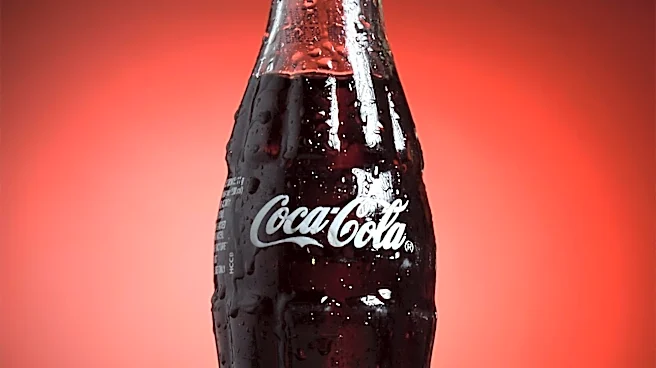
Coca-Cola maintains high customer loyalty and repeat purchases without relying on conventional points-based reward programs. Instead, the company focuses on behavioral design principles, including ritual, personalization, and widespread availability,
to foster customer habit and emotional connection. Coca-Cola previously operated a large-scale transactional loyalty program, 'My Coke Rewards,' from 2006, which allowed U.S. customers to enter codes for merchandise and offers. However, the company eventually phased out this program, integrating its mechanics into broader marketing efforts. This decision was based on the understanding that for frequently purchased, low-involvement products, a points scheme can introduce unnecessary friction without significantly influencing habitual purchase decisions. The brand's strategy emphasizes making repurchase feel automatic rather than earned, leveraging psychological principles like mere exposure, social proof, and the availability heuristic. Initiatives like 'Share a Coke' personalized the product itself, while sponsorships of major events like the Olympics and FIFA World Cup aim to embed the brand in high-emotion, recurring cultural rituals.
Why It's Important?
Coca-Cola's approach challenges the conventional wisdom in customer loyalty, suggesting that for certain product categories, transactional reward systems may be less effective than deeply integrated behavioral strategies. This has significant implications for U.S. businesses, particularly those in consumer goods, as it highlights the potential for building loyalty through intrinsic motivators rather than extrinsic rewards. Companies that traditionally rely on points, discounts, or tiered programs might re-evaluate their strategies, considering how to foster genuine habit and emotional attachment to their brands. The success of Coca-Cola's model indicates that investing in product availability, personalization at the product level, and associating with significant cultural moments can create more durable customer relationships. This shift could lead to more innovative marketing and customer experience strategies across various industries, moving beyond mere transactional incentives to create more profound brand connections.
What's Next?
Other U.S. brands may increasingly look to Coca-Cola's playbook to audit their own loyalty programs and customer retention strategies. This could lead to a trend where companies prioritize enhancing the core product or service experience and identifying existing customer rituals to integrate their brand, rather than solely focusing on reward schemes. Businesses might invest more in behavioral economics research to understand customer decision-making processes and design experiences that reduce friction and encourage habitual purchasing. We could see a rise in personalized product offerings, similar to 'Share a Coke,' and strategic partnerships that embed brands within significant cultural or emotional events. Furthermore, companies may leverage data from customer interactions, like Coca-Cola Freestyle's data on flavor preferences, to inform product development and refine customer experiences in real-time, moving away from reliance on post-purchase surveys.
Beyond the Headlines
The deeper implication of Coca-Cola's loyalty strategy lies in its ethical and psychological dimensions. By focusing on habit formation and emotional association, the company taps into subconscious decision-making processes, potentially creating a stronger, more ingrained brand preference that is less susceptible to competitive offers. This raises questions about consumer autonomy and the power of behavioral design in shaping purchasing patterns. From a long-term perspective, this approach could lead to a more sustainable form of brand loyalty, as it is built on intrinsic connections rather than fleeting incentives. It also underscores the importance of brand narrative and consistency over decades, demonstrating that a coherent emotional story can transcend cultural shifts and maintain relevance across generations. This model suggests a future where brand loyalty is less about what a company gives to a customer and more about how deeply it integrates into their daily lives and emotional landscape.