





What's Happening?
U.S. businesses are increasingly vulnerable to impersonation fraud, particularly in remote work environments, due to the proliferation of AI-generated deepfakes. These sophisticated digital manipulations of audio and visual imagery are being used by bad
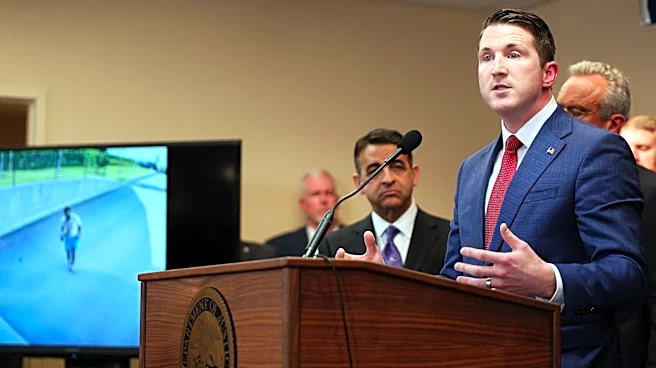
actors to deceive companies, leading to severe disruptions, data breaches, and theft. The FBI, FTC, and other enforcement agencies are frequently involved in cases stemming from fraudulent job applicants and employees. For instance, the Department of Justice recently announced actions against foreign workers who obtained remote positions using stolen or fabricated identity documents and virtual private networks to appear as U.S. persons. These individuals were aided by U.S.-based facilitators who hosted company-issued laptops, highlighting a complex network of fraud exploiting the vulnerabilities of remote hiring practices.
Why It's Important?
The rise of deepfakes and impersonation fraud poses significant threats to U.S. industries, impacting financial stability and data security. Businesses stand to lose substantial amounts through theft and suffer reputational damage from data breaches. The ease with which deepfakes can be created and their increasing realism make detection challenging, as fewer than 10% of people can recognize an audio deepfake. This technological advancement empowers criminals to exploit digital trust, making it harder for companies to verify the identities of their remote workforce. The situation necessitates a coordinated effort across various departments—including Data Privacy, Employment counsel, HR, Finance, and IT—to implement robust mitigation strategies and protect against evolving AI-fueled schemes.
What's Next?
Businesses must enhance their vigilance and adapt their hiring and security protocols to counter the growing threat of deepfakes and impersonation fraud. Key next steps include incorporating stringent identity verification into remote hiring and onboarding processes, such as requiring candidates to appear on camera without virtual backgrounds or in person for interviews. Companies should also implement red-flag rules in HR and cybersecurity systems, limit approved remote access tools, and conduct thorough background checks. Furthermore, refusing to ship company technology to addresses other than a worker's primary residence and maintaining robust incident response mechanisms are crucial. The ongoing evolution of AI means bad actors will continue to develop new schemes, requiring continuous adaptation and collaboration among internal teams to safeguard against future threats.
Beyond the Headlines
The ethical and legal implications of deepfakes extend beyond immediate financial and data security concerns. The ability to convincingly impersonate individuals, including public figures, raises profound questions about trust in digital interactions and the potential for widespread disinformation. In the workplace, the use of deepfakes by fraudulent remote workers challenges the fundamental concept of identity verification and could lead to increased scrutiny and potentially discriminatory practices in hiring. The legal framework surrounding AI-generated content and its misuse is still developing, creating a complex landscape for businesses and law enforcement. This trend underscores a broader societal challenge in distinguishing between authentic and synthetic realities, impacting not only corporate security but also public perception and the integrity of information.