



What's Happening?
Krones, a leading manufacturer of bottling and packaging machinery, has emphasized the significant role of a U.S. customer in driving innovation, particularly in the development of lightweight bottles for non-carbonated water. According to Wahl, a representative
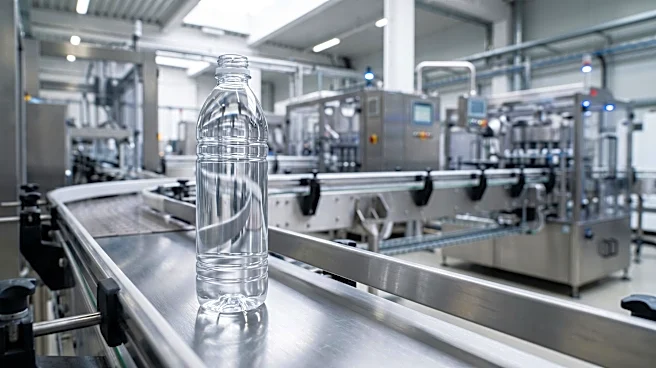
from Krones, a U.S. customer's demand for reducing PET per preform by just 0.5 grams for billions of bottles spurred Krones to overcome considerable technical challenges. These challenges included processing unstable lightweight bottles on the production line and ensuring stable palletizing without the bottom layer buckling. This customer-driven initiative positioned Krones as a pioneer in lightweight bottle technology, providing them with a competitive advantage in the market.
Why It's Important?
This development is crucial for the U.S. beverage industry, especially for companies dealing with high-volume production of non-carbonated beverages. The reduction in PET material, even by a small margin per bottle, translates into substantial cost savings and environmental benefits when scaled across billions of units. This innovation directly impacts the operational efficiency and sustainability goals of U.S. beverage manufacturers. Furthermore, Krones' experience with this U.S. customer demonstrates how specific market demands can lead to global technological advancements, benefiting the entire industry by setting new standards for packaging efficiency and material reduction. It also highlights the competitive pressure within the U.S. market that drives suppliers to innovate.
What's Next?
The success of lightweight non-carbonated water bottles, initially driven by a U.S. customer, is likely to continue influencing packaging trends globally. Other beverage companies, both in the U.S. and internationally, will likely adopt similar lightweighting strategies to reduce costs and environmental footprint. Krones, having gained expertise and a competitive edge, is well-positioned to offer these advanced solutions to a broader client base. This could lead to further research and development in sustainable packaging materials and processes, potentially impacting the entire supply chain from raw material suppliers to end-consumers. The focus on efficiency and sustainability will remain a key driver for future innovations in the bottling industry.
Beyond the Headlines
The story of lightweight bottle innovation extends beyond mere cost savings and efficiency; it touches upon the broader environmental movement and corporate responsibility. The demand for less material per bottle reflects a growing consumer and regulatory push for more sustainable practices in manufacturing. This U.S. customer's initiative, therefore, is not just a business decision but also a response to increasing environmental consciousness. It underscores how large-scale industrial practices can significantly contribute to reducing plastic waste and carbon emissions. This trend could also influence consumer perception, with brands adopting lightweight packaging potentially gaining favor among environmentally aware consumers, thereby creating a market advantage beyond just operational savings.