




What's Happening?
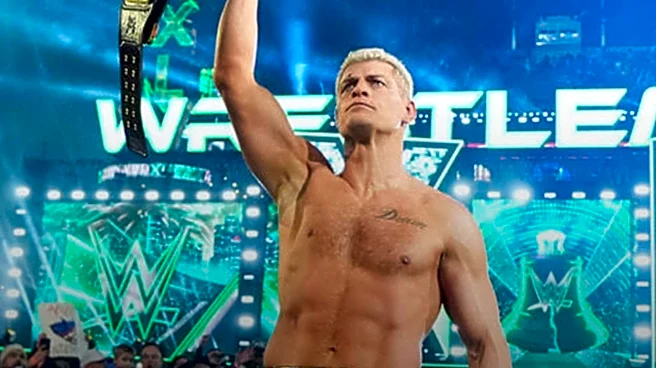
Paul 'Triple H' Levesque, the WWE Chief Content Officer (CCO), has previously stated that NXT should be considered one of WWE's three main brands, alongside 'WWE Raw' and 'WWE SmackDown.' This perspective contrasts with the view that NXT is primarily
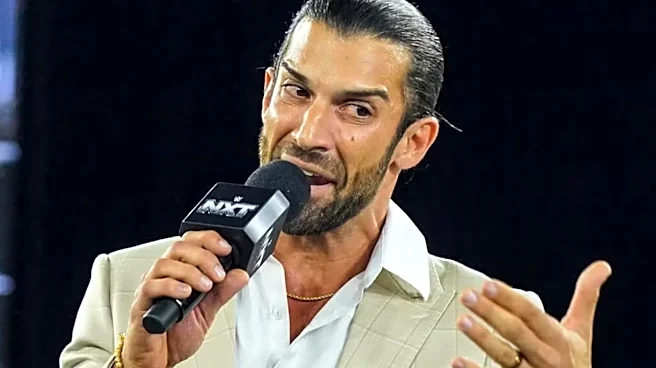
a developmental program for new talent. Robert Stone, the General Manager of WWE NXT, recently echoed this sentiment on 'Busted Open Radio,' pushing back against the 'developmental brand' label. Stone asserted that NXT possesses its own unique style, distinct from Raw and SmackDown, and indeed from all other wrestling brands. While acknowledging that NXT does develop talent, he argued that this function does not diminish its status as a standalone brand. He cited a recent match between Jaida Parker and Kelani Jordan as an example, claiming it was comparable to or even superior to matches seen on Raw or SmackDown, thereby demonstrating NXT's quality as a primary brand. In 2022, NXT head booker Shawn Michaels maintained that NXT was, in fact, a developmental program, indicating a nuanced internal discussion regarding the brand's identity.
Why It's Important?
The debate over NXT's classification as a 'developmental' versus a 'main' brand has significant implications for WWE's overall strategy, talent management, and market positioning. If NXT is viewed as a core brand, it suggests a more direct competitive role within the wrestling landscape, potentially attracting a different audience and higher-caliber talent directly. This could lead to increased investment in NXT's production, storylines, and marketing, elevating its profile and revenue potential. For talent, being part of a 'main' brand offers more immediate recognition and career advancement opportunities, rather than being seen as merely a stepping stone. Conversely, if it remains primarily developmental, its focus would be on nurturing future stars for Raw and SmackDown, which might limit its independent growth and creative freedom. Levesque's stance as CCO indicates a strategic shift towards strengthening NXT's independent identity, which could reshape the career paths of aspiring wrestlers and the competitive dynamics within professional wrestling.
What's Next?
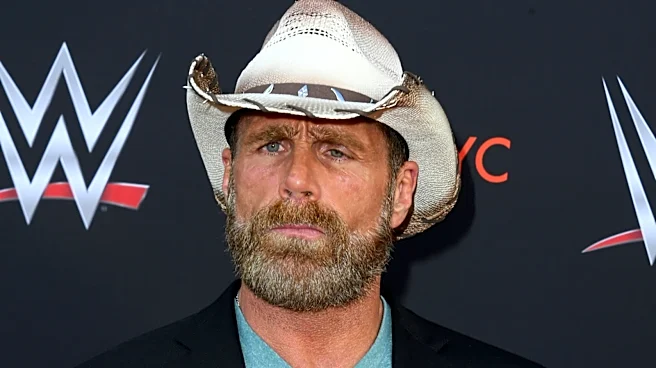
The ongoing discussion about NXT's identity suggests a continued evolution of the brand under Paul Levesque's leadership as CCO. While Shawn Michaels continues to run NXT, which airs on The CW network on Tuesday nights, the strategic direction appears to be aligning with Levesque's vision of NXT as a distinct and competitive brand. This could lead to further integration of NXT into WWE's broader narrative, potentially with more cross-brand appearances or storylines that elevate NXT's status. The success of NXT champions like Grayson Waller and Kelani Jordan, who recently captured their titles at 'NXT' Heatwave, will be crucial in validating the argument that NXT talent is on par with those on Raw and SmackDown. Future programming decisions, talent acquisitions, and marketing campaigns will likely reflect this strategic emphasis on NXT's unique style and competitive standing, aiming to solidify its position as a third major pillar within the WWE universe.
Beyond the Headlines
The redefinition of NXT from a purely developmental territory to a 'third brand' reflects a broader trend in entertainment and sports, where niche or feeder leagues seek to establish their own distinct identities and fan bases. This move by WWE, under Paul Levesque, could be seen as an attempt to diversify its product offerings and capture a wider audience, rather than solely relying on its flagship shows. It also speaks to the changing landscape of talent development, where performers are increasingly expected to be polished and ready for prime time earlier in their careers. The emphasis on NXT's 'unique style' suggests a creative differentiation strategy, allowing for experimentation and catering to different tastes within the wrestling fan base. This strategic pivot could influence how other sports and entertainment organizations structure their talent pipelines and brand portfolios, potentially leading to more autonomous and competitive 'minor league' systems that contribute significantly to the overall ecosystem.