




What's Happening?
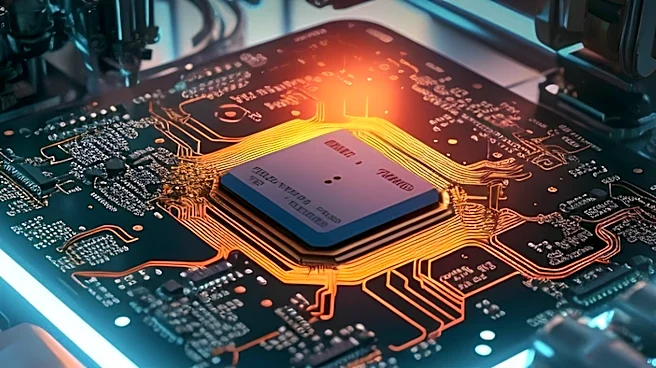
The JEDEC Engineering Standards Association has released preliminary technical specifications for the next generation of DDR6 RAM. These new modules are projected to be 44% shorter than current DDR5 modules, which will facilitate easier component packaging
on motherboards and server systems. A significant upgrade is the anticipated maximum data transfer rate of 14.4 GT/s. Internally, DDR6 will see its memory bus width expand from 64 to 96 bits, with an estimated increase in overall bandwidth by over 50% at its commercial launch. The specifications also detail the use of higher-density DRAM chips, capable of up to 128 Gb, and improved power management mechanisms designed to enhance energy efficiency. These advancements are expected to enable the processing of larger data volumes with fewer bandwidth constraints, particularly benefiting demanding applications.
Why It's Important?
The preliminary specifications for DDR6 memory are crucial for the advancement of artificial intelligence systems, data centers, and high-performance computing in the U.S. and globally. The increased bandwidth and data transfer rates will significantly accelerate data exchange between RAM, server processors, and local AI accelerators, which is vital for training and running neural networks more efficiently. This technological leap will allow U.S. tech companies and research institutions to process complex AI models faster, potentially leading to breakthroughs in various fields from scientific research to commercial applications. The improved energy efficiency will also be a key factor for data centers, helping to reduce operational costs and environmental impact, which is increasingly important for large-scale computing infrastructure in the U.S.
What's Next?
The JEDEC standard for DDR6 is still in its finalization stages, meaning the stated module sizes, data transfer rates, bus widths, and chip specifications are preliminary and subject to change. The industry will closely monitor JEDEC's ongoing development and subsequent updates to the standard. Once finalized, memory manufacturers will begin designing and producing DDR6 modules based on these specifications. This will pave the way for hardware developers to integrate DDR6 into next-generation computing platforms, including new server architectures, high-end workstations, and potentially consumer-grade devices. The widespread adoption of DDR6 will likely occur in phases, with initial deployment in specialized high-performance computing and AI sectors before broader market penetration.
Beyond the Headlines
The shift to DDR6 represents more than just an incremental upgrade in memory technology; it signifies a foundational change that will underpin the next wave of digital innovation. The increased capacity and speed are not merely about faster computers but about enabling entirely new paradigms in data processing and AI. This could lead to more sophisticated AI models, real-time data analytics on an unprecedented scale, and more efficient cloud computing infrastructure. The emphasis on power management also highlights a growing industry focus on sustainability and efficiency, which will be critical as computing demands continue to escalate. The U.S., as a leader in technology and AI development, stands to benefit significantly from these advancements, potentially solidifying its position in the global tech landscape.