
What's Happening?
Billy Ray Smith Jr., a former linebacker for the San Diego Chargers, has passed away at the age of 64. His family has attributed his death to complications from chronic traumatic encephalopathy (CTE), a progressive brain disease linked to repeated head
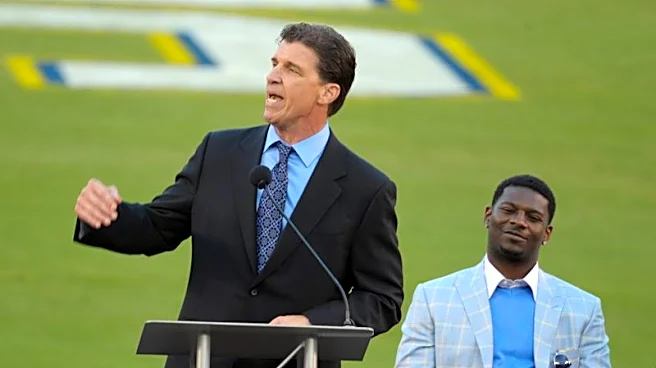
impacts. Smith Jr. was a prominent figure in the San Diego sports community, having played all 126 of his NFL games with the Chargers from 1983 to 1992. After retiring, he became a well-known sportscaster and radio host in the area. Smith Jr. was also active in charitable work alongside his wife, Kimberly Hunt, a broadcaster. His death highlights ongoing concerns about the long-term health impacts of playing professional football, particularly regarding brain injuries.
Why It's Important?
The death of Billy Ray Smith Jr. underscores the serious health risks associated with contact sports like football, where repeated head trauma can lead to CTE. This condition has been diagnosed posthumously in a significant number of former NFL players, raising questions about player safety and the long-term effects of concussions. The issue of CTE has prompted the NFL to implement stricter safety protocols and concussion management policies. However, the high incidence of CTE among former players continues to be a major concern for the league, players, and their families. Smith Jr.'s passing adds to the growing list of athletes affected by this condition, highlighting the need for ongoing research and preventive measures.
What's Next?
The NFL and other sports organizations may face increased pressure to further enhance safety measures and support for players dealing with the aftermath of head injuries. There could be calls for more comprehensive health monitoring and support systems for retired athletes. Additionally, Smith Jr.'s death may contribute to the ongoing dialogue about the risks of contact sports and the need for reforms to protect players at all levels, from youth leagues to professional teams. The focus may also shift towards developing better diagnostic tools for CTE that can be used during a player's lifetime.
Beyond the Headlines
Smith Jr.'s life and career reflect the broader cultural and ethical challenges faced by contact sports. His contributions to the San Diego community, both on and off the field, highlight the dual legacy of athletes who achieve fame and success but also face significant health risks. The ethical considerations surrounding player safety, informed consent, and the responsibility of sports organizations to protect their athletes are likely to remain central to discussions about the future of football and similar sports. Smith Jr.'s story may inspire further advocacy for player health and safety reforms.