






What's Happening?
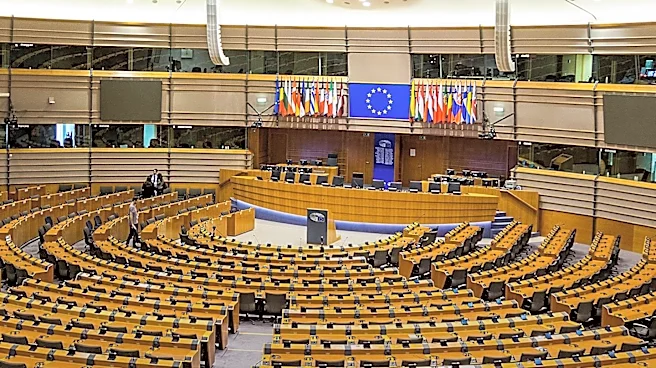
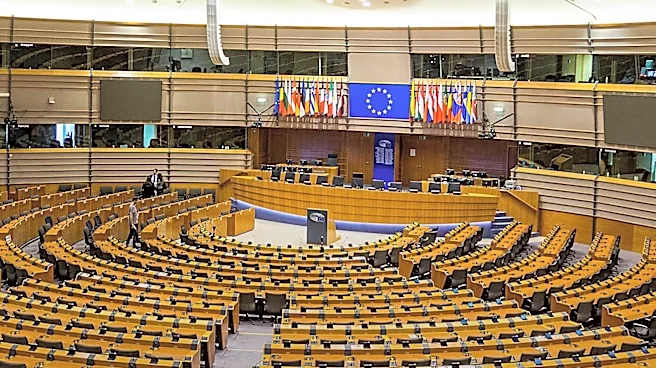
The European Commission's ambitious proposal for a single, pan-European company form, dubbed 'EU Inc.,' has encountered significant obstacles in the European Parliament. The initiative, championed by Commission President Ursula von der Leyen, aims to
simplify business registration, establish a unified European legal standard, and facilitate stock options to enhance European competitiveness against American and Chinese counterparts. However, disagreements between the Parliament’s largest political groups, particularly concerning how EU Inc. would interact with member states’ laws on employee participation in management decisions, have led to a deadlock. This impasse makes it increasingly unlikely that the Council, Commission, and Parliament will reach an agreement by the end of 2026, the target set by von der Leyen. Left-wing groups and trade unions are concerned that EU Inc. could undermine existing national codetermination rights, allowing companies to circumvent employee participation obligations.
Why It's Important?
The stalled EU Inc. proposal represents a significant setback for the European Commission's competitiveness agenda and highlights the inherent tension between fostering a more unified single market and preserving national social rights. For U.S. businesses and investors, the success or failure of EU Inc. has implications for the ease of doing business in Europe. A streamlined, pan-European company form could make the EU a more attractive market for U.S. companies seeking to expand, reducing regulatory complexities and costs. Conversely, the current deadlock underscores the persistent fragmentation of the European market, which can deter foreign investment and hinder cross-border operations. The debate also reflects a broader ideological struggle within Europe between economic liberalization and the protection of social welfare, a balance that significantly impacts the continent's economic model and its global competitiveness.
What's Next?
The legislation is currently stuck in the European Parliament, with the Committee on Legal Affairs failing to hold a scheduled vote due to ongoing disagreements. Further negotiations will be required to bridge the divide between political groups, particularly on the issue of employee participation. Left-wing parties and trade unions are pushing for stronger safeguards to prevent EU Inc. from eroding national labor laws, while advocates for the proposal emphasize the need for a more competitive corporate framework. The Council's position, adopted in October, already limited the scope of employee stock options and granted member states additional powers to ensure compliance with national employee participation rules. The future of EU Inc. hinges on whether a compromise can be reached that satisfies both the drive for competitiveness and the protection of social rights, potentially involving further modifications to the proposal's scope and safeguards.
Beyond the Headlines
The EU Inc. proposal was conceived as Europe's answer to the highly efficient corporate framework found in the United States, such as the Delaware Corporation, which offers a streamlined regulatory environment. The current deadlock exposes a fundamental challenge for the EU: how to create a truly integrated single market that can compete globally while respecting the diverse legal and social traditions of its member states. The fear that EU Inc. could lead to a 'race to the bottom' in labor standards highlights the deep-seated commitment to social protections in many European countries. This tension between economic efficiency and social equity is a recurring theme in European integration. If the EU fails to resolve this, it risks continued brain drain and capital flight to more unified markets like the U.S., potentially hindering its ability to foster innovation and create globally competitive companies. The outcome will shape not only Europe's corporate landscape but also its broader socio-economic identity.