

What's Happening?
Fitness experts are challenging the common misconception that endless crunches are the key to a flatter stomach or a strong core. Mark Kovacs, Ph.D., an Atlanta-based exercise physiologist, states that 'you cannot crunch your way to a flatter stomach'
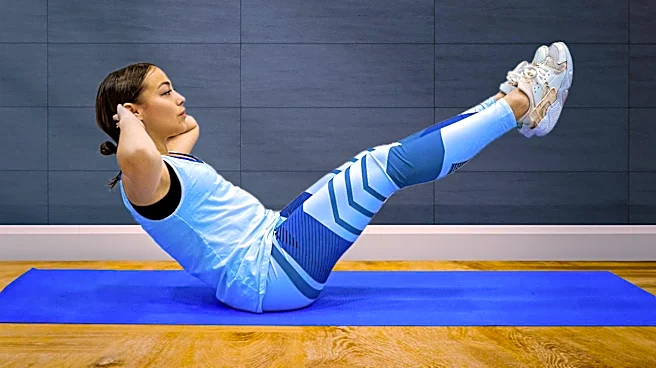
and emphasizes that spot reduction of fat is a myth. Instead, building a strong core is about developing overall strength and stability that supports the body in daily activities, rather than just achieving visible abs. Jodi Woodward, a fitness instructor in Lawrenceville, highlights that a strong core stabilizes the spine, improves posture and balance, and transfers power between the upper and lower body. Experts recommend four specific exercises—planks, hip dips, leg raises, and Russian twists—to engage various muscle groups for a more comprehensive and effective core workout.
Why It's Important?
A strong core is fundamental for overall physical health and functionality, extending far beyond aesthetic goals. It plays a critical role in supporting everyday movements, from carrying groceries and lifting children to simply getting up from a chair. By stabilizing the spine and improving posture, a robust core can significantly reduce the risk of injuries and enhance the body's ability to handle physical demands. As individuals age, maintaining core strength, stability, and balance becomes increasingly vital for staying active and independent. The focus shifts from superficial appearance to functional capability, allowing individuals to lift heavier weights, maintain better posture, and move with confidence. This holistic approach to core strength contributes to long-term well-being and reduces the likelihood of mobility issues.
What's Next?
Individuals looking to strengthen their core should incorporate a variety of exercises that engage different muscle groups, moving beyond traditional crunches. The recommended exercises include planks, which engage abdominal muscles, back, shoulders, and glutes; hip dips, targeting obliques; leg raises, working abdominal muscles and hip flexors; and Russian twists, focusing on torso rotation. For planks, individuals can start with 20-30 second holds and progress to 60 seconds for 2-3 sets. Hip dips and leg raises can be performed for 2-3 sets of 10-12 repetitions per side or total. Russian twists can begin with 10 repetitions per side, increasing as strength improves. Consistency in these varied exercises will lead to a stronger, more stable core, enhancing daily physical performance and reducing injury risk.
Beyond the Headlines
The re-evaluation of core training methods reflects a broader shift in fitness philosophy towards functional movement and holistic health. This perspective challenges the pervasive influence of media-driven body image ideals, which often prioritize visible abs over actual physical capability. By debunking the 'crunches for abs' myth, experts are empowering individuals to pursue fitness goals that genuinely improve their quality of life and long-term health. This also has implications for public health messaging, encouraging a focus on functional strength and injury prevention rather than purely aesthetic outcomes. The emphasis on core stability as a foundation for all movement underscores its importance in preventing chronic pain and maintaining independence, fostering a more sustainable and beneficial approach to physical activity for all ages.