




What's Happening?
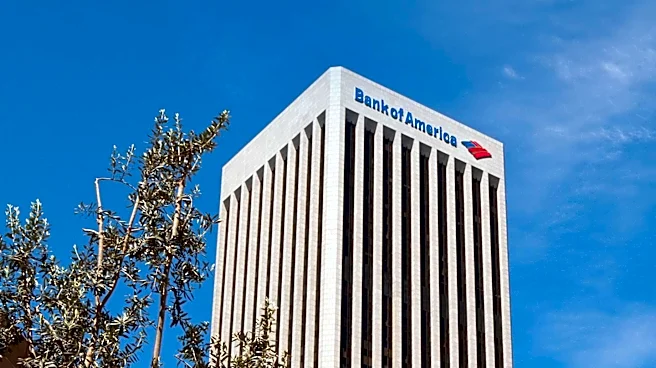
Bank of America (NYSE:BAC) saw its stock price fall by approximately 1.3% to $58.695 after CEO Brian Moynihan projected third-quarter investment-banking fees to be between $1.6 billion and $1.8 billion. This outlook, shared at an investor conference and reported
by Reuters, indicates a potential drop of 10% to 20% from the $2 billion generated in the same period last year. Despite this, investment banking fees constituted only about 7% of the company's total second-quarter revenue of $31.6 billion. Other revenue streams, such as consumer banking, wealth management, trading, and net interest income, are expected to continue driving the bank's earnings. Management anticipates sales-and-trading revenue to remain steady, near $5.4 billion, and notes a healthy deal pipeline. However, elevated borrowing costs are a concern, as they may deter companies from engaging in debt market activities or transactions requiring significant financing.
Why It's Important?
This guidance from Bank of America's CEO highlights a potential slowdown in the investment banking sector, which could reflect broader economic trends. A decline in dealmaking activity, influenced by higher borrowing costs, suggests that businesses may be more cautious about mergers, acquisitions, and other capital-intensive projects. This conservative approach by corporations can impact the financial services industry, particularly those segments reliant on advisory fees and transaction volumes. While investment banking is a significant component, Bank of America's diversified revenue streams, including consumer banking and wealth management, provide a buffer against a downturn in any single area. However, a sustained period of reduced dealmaking could signal a more challenging environment for financial institutions and the broader economy, affecting investor confidence and potentially leading to further stock market volatility.
What's Next?
Investors will closely monitor Bank of America's third-quarter earnings report to see if the projected decline in investment banking fees materializes as anticipated. The bank's performance in other key areas, such as consumer banking and wealth management, will be crucial in offsetting any weakness in investment banking. The ongoing impact of elevated borrowing costs on corporate financing demand will also be a critical factor to watch. If interest rates remain high, companies may continue to delay or reconsider large transactions, potentially extending the period of reduced investment banking activity. Conversely, any signs of a stabilization or decrease in borrowing costs could lead to a resurgence in dealmaking. The bank's ability to leverage its diverse business segments will be key to navigating this period of uncertainty in the financial markets.
Beyond the Headlines
The projected dip in Bank of America's investment banking fees could be an early indicator of a broader shift in corporate financial strategies. In an environment of higher interest rates, companies are likely to prioritize debt reduction and organic growth over aggressive expansion through mergers and acquisitions. This could lead to a more conservative capital allocation approach across various industries. For the financial sector, it might necessitate a greater emphasis on core banking services, such as lending and deposit-taking, and a re-evaluation of the profitability of investment banking divisions. The long-term implications could include a recalibration of risk appetites among both corporations and financial institutions, potentially fostering a more cautious and less speculative market environment. This trend could also influence regulatory scrutiny, as authorities might focus on the stability of diversified financial institutions during periods of economic uncertainty.