



What's Happening?
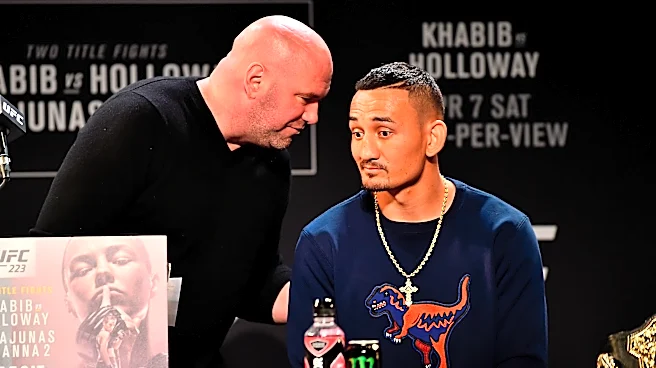
UFC CEO Dana White has expressed a strong desire to host a UFC event in Hawaii, a long-standing goal for the organization. White stated on 'The Rich Eisen Show' that Hawaii has been one of the UFC's biggest markets since its inception, despite never having
hosted an event there. The primary obstacle has been the lack of suitable infrastructure to support a major UFC event. However, the construction of a new arena in Halawa, Oahu, known as the New Aloha Stadium, could change this. This new facility is projected to be completed by March 2029 and will have a seating capacity of 31,000. Hawaii has produced multiple UFC world champions, including Max Holloway and B.J. Penn, as well as former heavyweight Travis Browne, further fueling the desire for a local event.
Why It's Important?
Bringing a UFC event to Hawaii would be a significant development for both the sport and the state. For the UFC, it would tap into a passionate and loyal fanbase that has historically supported Hawaiian fighters, potentially generating substantial revenue and expanding its global reach. For Hawaii, hosting such a high-profile event could provide a significant boost to its tourism industry, attracting visitors and media attention. The construction of the New Aloha Stadium, designed to accommodate large-scale events, signifies a broader investment in the state's infrastructure, which could attract other major sporting and entertainment events in the future. This move could also inspire local athletes and further solidify Hawaii's reputation as a hub for combat sports talent, creating new opportunities for economic growth and community engagement.
What's Next?
With the New Aloha Stadium projected to be completed by March 2029, the earliest a UFC event could be held in Hawaii would be sometime after that date. Dana White's public comments indicate a clear intention to pursue this opportunity once the infrastructure is in place. The UFC will likely begin discussions with the stadium management and local authorities closer to the completion date to iron out logistics, scheduling, and potential economic incentives. The event would undoubtedly be a hot ticket, as White himself noted, attracting both local fans and tourists. The success of a potential UFC Hawaii event could pave the way for other major sports leagues and entertainment organizations to consider the state as a viable venue, further diversifying Hawaii's economy beyond traditional tourism.
Beyond the Headlines
The prospect of a UFC event in Hawaii goes beyond mere sports entertainment; it touches upon themes of cultural identity, economic development, and the evolving landscape of professional sports. Hawaii's deep connection to combat sports, particularly through its homegrown champions, reflects a unique cultural affinity for martial arts and competitive spirit. Hosting a UFC event would not only celebrate this heritage but also provide a platform for local talent on a global stage. Furthermore, the investment in the New Aloha Stadium represents a strategic effort to modernize Hawaii's infrastructure, positioning it as a destination for major events. This could lead to a broader economic diversification strategy, reducing reliance on traditional tourism and fostering new industries. The anticipation surrounding such an event also highlights the power of sports to unite communities and generate significant public interest, creating a lasting legacy for the state.