




What's Happening?
The U.S. has extended its trade truce with China for two months, pushing the expiration date to January 9, 2027. This extension includes the continued exclusion of 178 products from Section 301 tariffs on China, which were previously set to expire on November
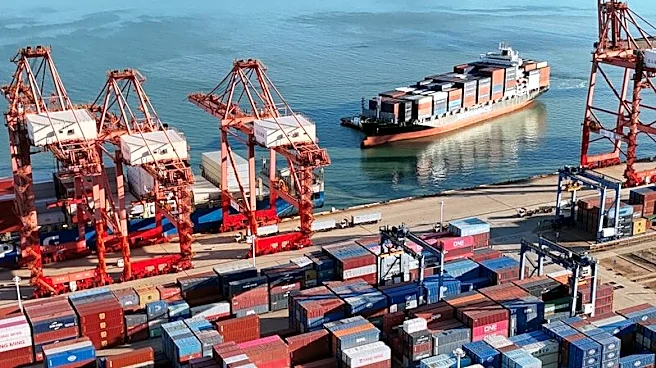
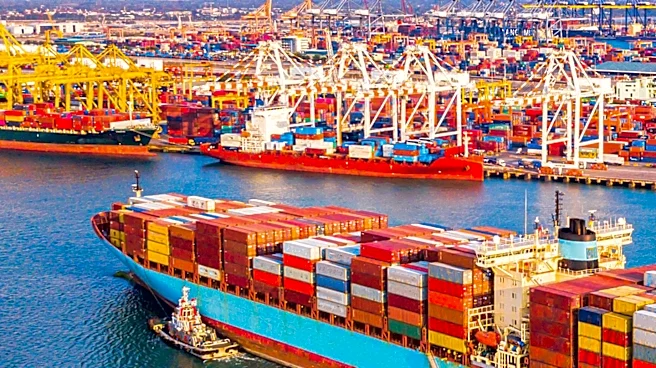
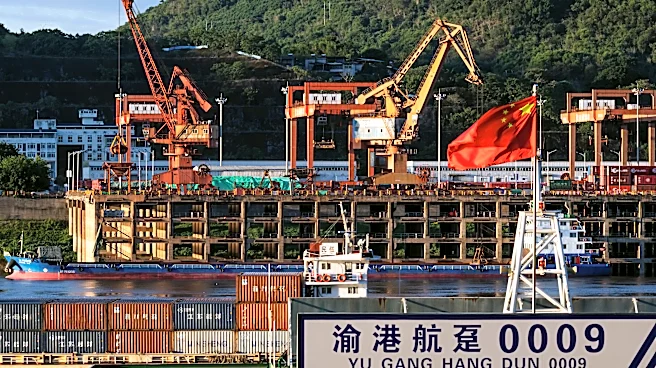
9. These exclusions apply to specific HTSUS numbers and product descriptions, regardless of whether an importer filed an exclusion request. Additionally, the Office of the U.S. Trade Representative (USTR) has prolonged the suspension of fees on Chinese-owned or -operated vessels and Chinese-built vessels, as well as the 100 percent tariffs on imports of certain ship-to-shore cranes and cargo handling equipment from China. The Bureau of Industry and Security has also extended the suspension of its interim final rule, which would have expanded export restrictions to subsidiaries of entities on the Entity List and Military End-User List, until January 10, 2027. This rule would have subjected entities at least 50 percent owned by listed entities to stringent license requirements for exports.
Why It's Important?
This extension of the trade truce provides a temporary reprieve for U.S. importers and industries that rely on the excluded Chinese products and services. Businesses importing the 178 specified products will continue to benefit from the absence of Section 301 tariffs, potentially maintaining lower costs and more stable supply chains. The suspension of fees on Chinese vessels and tariffs on port equipment is significant for the maritime and logistics sectors, as it avoids increased operational costs that could be passed on to consumers. The continued suspension of the export restriction rule offers certainty to U.S. companies engaged in trade with Chinese entities, preventing a broader application of export controls that could disrupt existing business relationships and supply networks. However, the U.S. government's stated dissatisfaction with China's implementation of its commitments suggests that this extension is a temporary measure, and future policy changes could still impact these sectors.
What's Next?
The current extensions are set to expire in early January 2027, indicating that the U.S. government will need to reassess its trade policy with China before then. The USTR's emphasis on China 'fully and immediately implementing its commitments' suggests that the future of these tariff exclusions and suspensions hinges on China's actions. Businesses should monitor developments closely, as a failure by China to meet U.S. expectations could lead to the re-imposition of tariffs and fees, or the full implementation of export restrictions. This could necessitate adjustments in sourcing, supply chain management, and export strategies for affected U.S. companies. The upcoming decisions will likely influence trade relations and economic stability between the two nations.