



What's Happening?
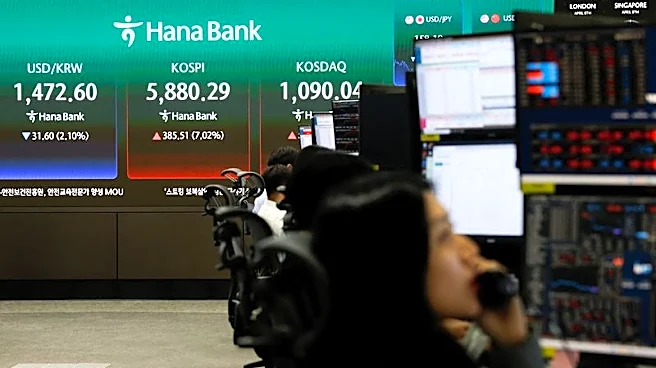
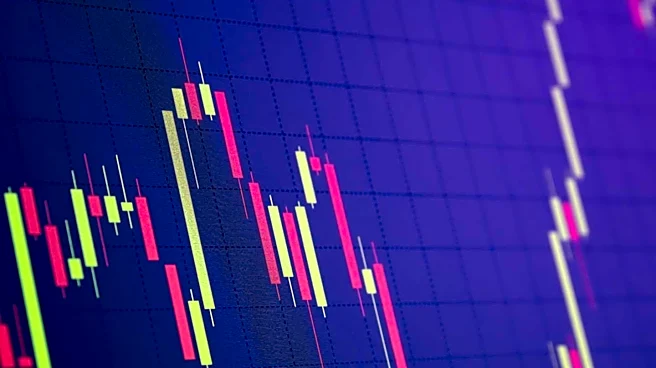
South Korea's financial authorities convened an emergency meeting as the KOSPI index shed 864.5 trillion won in value over two trading sessions. The index closed down nearly 6% on Wednesday, triggering a market-wide circuit breaker for the second consecutive
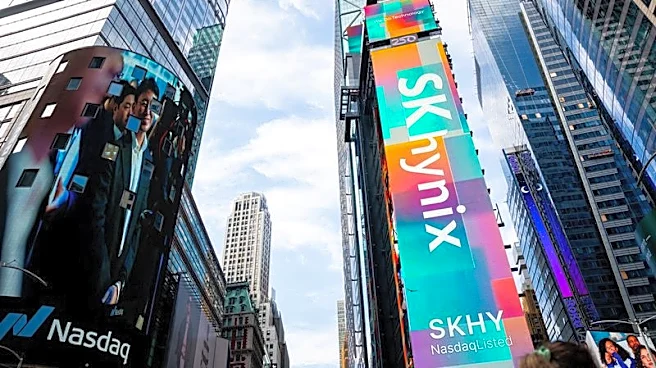
day. The selloff has been partly attributed to single-stock leveraged products introduced in May, which lawmakers argue have increased market volatility. Finance Minister Koo Yun-cheol, along with other financial leaders, discussed potential measures to stabilize the market, including additional regulatory steps. The decline was exacerbated by SK Hynix missing analyst expectations despite a record quarter, contributing to the market's instability.
Why It's Important?
The emergency meeting underscores the severity of the financial situation in South Korea, highlighting the risks associated with leveraged financial products. The market's volatility poses a threat to investor confidence and could have broader economic implications if not addressed promptly. The situation also raises questions about the adequacy of current financial regulations and the need for more stringent oversight to prevent similar occurrences in the future. The outcome of the meeting and subsequent actions by financial authorities will be critical in restoring market stability and investor trust.
What's Next?
South Korea's financial authorities are expected to implement additional measures to curb market volatility, potentially including stricter regulations on leveraged trading products. The effectiveness of these measures will be closely monitored by investors and could influence regulatory approaches in other markets facing similar challenges. The response from major companies, such as SK Hynix and Samsung Electronics, will also be pivotal in determining the market's recovery. Continued dialogue between financial authorities and market participants will be essential in navigating the current crisis and preventing future disruptions.