








What's Happening?
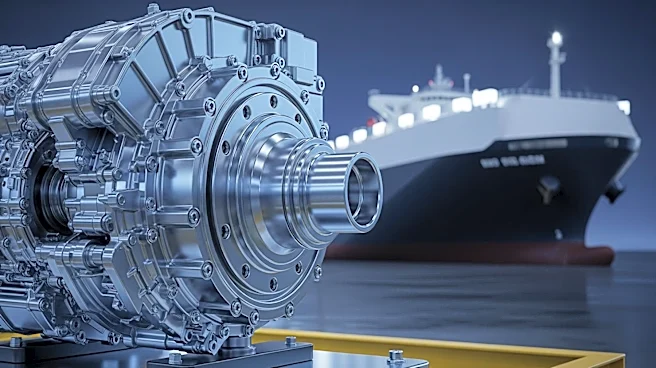
Everllence has announced the world's first order for its latest dual-fuel methane engine, the ME-GI 10.7. This engine will be used in a new series of car-carrier vessels for Global Car Carriers (GCC), a Norwegian shipowner. The order includes four 6S60ME-GI
Mk10.7 engines, which will be built by CSSC Engine Co., Ltd. in Qingdao, China, and installed on four 8,600 car equivalent unit vessels under construction at China Merchants Jinling Shipyard in Nanjing, China. The ME-GI 10.7 platform is noted for its operational flexibility, high fuel efficiency, and negligible methane slip, making it a preferred choice in the maritime industry. This development marks a significant milestone for Everllence, reinforcing its position as a leader in dual-fuel propulsion solutions.
Why It's Important?
The introduction of the ME-GI 10.7 engine represents a significant advancement in maritime propulsion technology, particularly for the car-carrier segment. By adopting this engine, GCC is set to benefit from reduced fuel consumption and improved earnings potential due to the engine's high thermal efficiency. Additionally, the engine's dual-fuel capability allows for fuel flexibility without compromising efficiency, which is crucial for optimizing fuel strategies over time. The environmental benefits, including a reduced methane slip, align with global efforts to minimize the maritime industry's carbon footprint and comply with future regulations. This order underscores the industry's confidence in Everllence's technology and its potential to drive sustainable maritime operations.
What's Next?
As the ME-GI 10.7 engine program continues to expand, it is expected to see broader adoption across various maritime segments. The successful implementation of these engines in GCC's vessels could lead to further orders and collaborations, enhancing Everllence's market presence. The maritime industry may also see increased interest in dual-fuel technologies as companies seek to balance operational efficiency with environmental compliance. Stakeholders, including shipowners and regulatory bodies, will likely monitor the performance of these engines closely, potentially influencing future maritime propulsion standards and practices.