







What's Happening?
The Kama Sutra, an ancient Indian text on love and pleasure, continues to shape global concepts of desire, intimacy, and relationships. Originally composed around the 2nd century CE by Vatsyayan, the text transcends its status as a mere manual on sexual
techniques, offering a sophisticated exploration of human emotions and social dynamics. Its journey from an ancient Sanskrit text to a global cultural phenomenon reflects shifting attitudes toward sexuality, power, and personal fulfillment. The Kama Sutra's teachings emphasize emotional intelligence, communication, and mutual respect alongside physical intimacy, making it a living influence that evolves with each generation's understanding of desire.
Why It's Important?
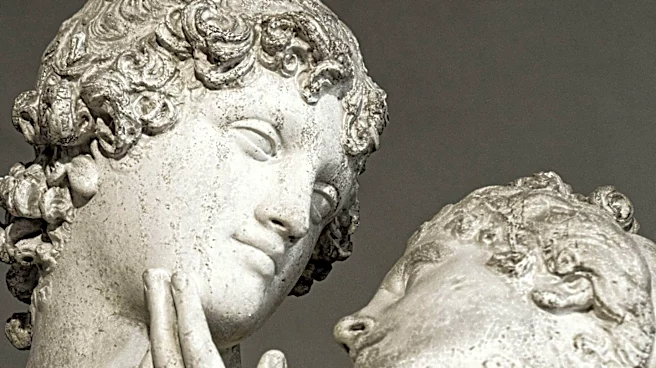
The Kama Sutra's enduring appeal lies in its nuanced stance on pleasure, which is seen as a vital life force worthy of cultivation when balanced with duty and purpose. Its integration into yoga and meditation communities underscores its broader message that bodily awareness and emotional intelligence are intertwined with spiritual well-being. The text's influence extends beyond academic circles into global artistic and intellectual expression, inspiring countless paintings, sculptures, and film narratives. It offers alternative visions rooted in balance and mindfulness, challenging Western-centric models of intimacy and contributing to global conversations around consent, mental health, and authentic connection.
Beyond the Headlines
Despite its acclaim, the Kama Sutra's place in international discourse is not without controversy. Critics argue that its erotic focus is sometimes oversimplified or exoticized. However, defenders emphasize its enduring social function as a tool for navigating consent and emotional reciprocity. The text is framed not only as Indian heritage but as world heritage, relevant to postcolonial studies and gender theory. Its principles are connected to modern psychology, revealing parallels with attachment theory and nonviolent communication models. The Kama Sutra remains a cultural compass for navigating the complexities of human connection, celebrating pleasure while anchoring it in ethics and mutual growth.