







What's Happening?
Tate & Lyle, a global provider of food and beverage ingredients, is actively involved in advancing personalized nutrition, which focuses on creating tailored dietary plans based on individual needs. The company recognizes that a 'one size fits all' approach
to nutrition is ineffective and that consumer demand for customized food and beverage products is high. Since 2021, Tate & Lyle has been a part of IMAGINE, an international consortium of academic and commercial industry partners. This collaboration aims to make personalized nutrition more accessible and widespread by developing healthier, tastier products that meet specific dietary requirements. The research conducted through IMAGINE demonstrates that personalization can lead to more effective health outcomes and behavioral changes, such as increased fiber intake. Tate & Lyle's involvement includes providing expertise on fibers, sweeteners, and texturants, particularly in the context of innovative technologies like 3D food printing, which allows for unprecedented levels of customization in food products. This technology has potential applications for hospitalized or home-bound patients, military personnel in the field, and even customized nutritional aids dispensed through vending machines.
Why It's Important?
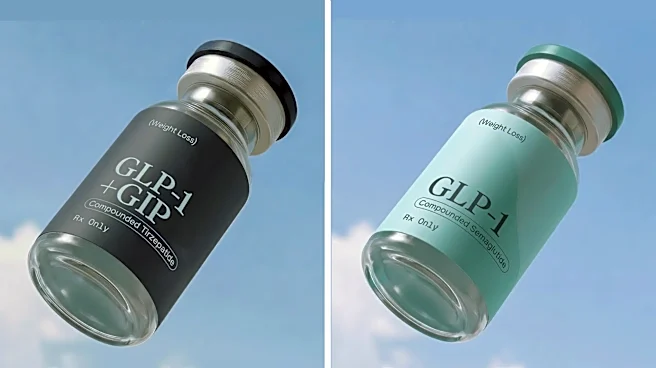
The push for personalized nutrition by companies like Tate & Lyle is significant for the U.S. food and beverage industry and public health. With a growing understanding that individual nutritional needs vary based on factors like age, health conditions, and even microbiome composition, the development of tailored products can address critical dietary gaps. For instance, the U.S. faces a substantial 'fiber gap,' with fewer than 10% of American adults meeting daily fiber intake targets. Personalized nutrition, through fortified foods and customized products, offers a practical solution to this widespread issue, especially for those with busy lifestyles or specific dietary barriers. Furthermore, the focus on creating nutrient-dense, smaller-portioned products is particularly relevant in the context of new weight management medications like GLP-1s (e.g., Ozempic®), which reduce appetite and portion sizes. This trend creates new market opportunities for manufacturers to innovate and cater to evolving consumer needs, potentially leading to improved health outcomes and reduced healthcare burdens associated with diet-related illnesses.
What's Next?
Tate & Lyle will continue its work with the IMAGINE consortium, focusing on further research and development in 3D food printing and other innovative technologies to enhance personalized nutrition. The company aims to expand the accessibility of tailored nutritional products, potentially through wider distribution in grocery stores and specialized vending machines. They will also likely continue to collaborate with customers in the food and beverage industry to develop formulations that address specific consumer trends, such as those related to weight management and the increasing use of GLP-1 medications. This involves creating products that are not only nutritionally optimized but also appealing in taste, texture, and mouthfeel to ensure consumer acceptance and sustained behavioral change. The ongoing research into the benefits of various fibers, including their prebiotic potential, will also inform future product development, with a focus on gut health and its broader impact on well-being.
Beyond the Headlines
The advancement of personalized nutrition, spearheaded by companies like Tate & Lyle, has profound implications beyond immediate dietary improvements. Ethically, it raises questions about equitable access to these potentially more effective nutritional solutions, ensuring that personalized options are not exclusively available to higher-income demographics. The integration of advanced technologies like 3D food printing into food production could revolutionize how food is manufactured and consumed, potentially leading to more sustainable and less wasteful food systems by producing only what is needed. Culturally, a shift towards highly individualized diets could challenge traditional food cultures and communal eating practices. Legally, the evolving landscape of personalized nutrition may necessitate new regulatory frameworks for labeling, health claims, and data privacy, especially as genetic and microbiome data become more integral to dietary recommendations. The long-term societal impact could include a more proactive approach to health management, where diet is precisely aligned with individual biological needs, potentially reducing the prevalence of chronic diseases and extending healthy lifespans.