





What's Happening?
WWE is reportedly escalating its counterprogramming efforts against All Elite Wrestling (AEW) with a strategic goal to weaken AEW's position before its upcoming television contract negotiations. According to Bryan Alvarez on Wrestling Observer Live, WWE aims
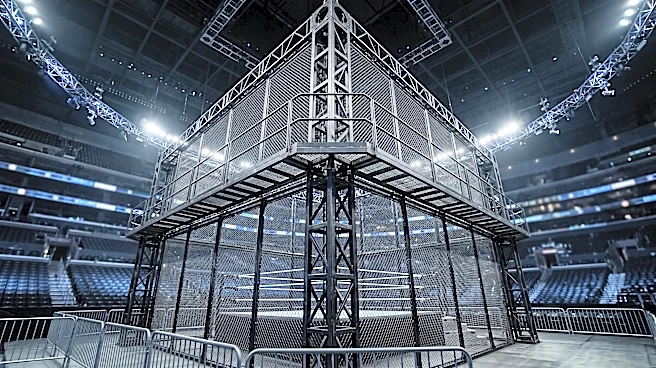
to chip away at AEW's viewership numbers by scheduling its own shows, such as NXT, directly against major AEW events. This strategy was evident with NXT's head-to-head scheduling against AEW's Blood & Guts on November 4. WWE's confidence in this approach has grown after NXT previously outperformed AEW in a direct ratings battle, leading them to plan more aggressively for future confrontations. The media landscape is currently in flux, with recent sales in the business adding uncertainty to future television deals, making these negotiations critical for AEW.
Why It's Important?
This aggressive counterprogramming by WWE has significant implications for the professional wrestling industry and the competitive landscape between the two major promotions. By consistently attempting to reduce AEW's viewership, even by small percentages, WWE seeks to diminish AEW's perceived value to broadcasters. A weaker viewership could translate into less favorable terms for AEW during its next television contract negotiations, potentially impacting its financial stability and growth. For WWE, a weakened competitor could solidify its dominant market position and ensure more lucrative deals for its own programming. This rivalry affects not only the companies but also the talent, production crews, and ultimately, the wrestling fans who are presented with competing content on the same nights.
What's Next?
The immediate future will likely see continued direct competition between WWE and AEW programming. Following the November 4 head-to-head battle between NXT and Blood & Guts, WWE is expected to maintain its strategy of loading up its shows when scheduled against AEW events. As AEW approaches its contract year, the success or failure of WWE's counterprogramming will be closely watched by industry analysts and broadcasters. The outcome of these viewership battles could directly influence the terms of AEW's next television deal, which Alvarez anticipates will likely keep AEW on TBS and TNT, but potentially under more challenging conditions due to WWE's efforts. The evolving media business landscape will also play a crucial role in shaping these negotiations.
Beyond the Headlines
Beyond the immediate ratings war, this strategic maneuver by WWE highlights the intense business competition within the entertainment sector, particularly in live sports and entertainment programming. It underscores how established entities leverage their resources to maintain market dominance against emerging competitors. The long-term implications could include a shift in how wrestling content is distributed and consumed, potentially leading to more exclusive streaming deals or changes in traditional broadcast models. This rivalry also raises questions about fair competition and the tactics companies employ to gain an advantage, influencing not just viewership numbers but also talent acquisition and overall industry innovation. The struggle for audience share reflects broader trends in media fragmentation and the fight for consumer attention.