
What's Happening?
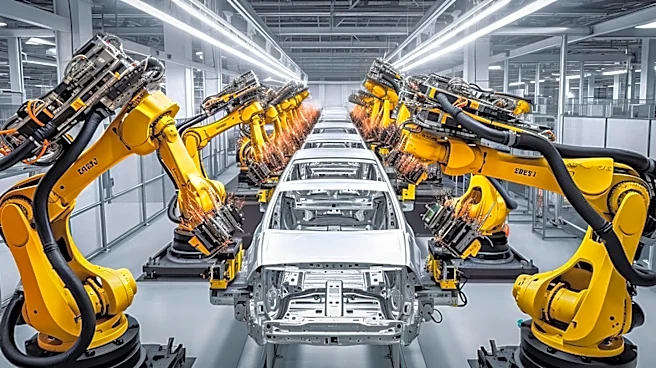
Physical AI, exemplified by Archetype AI’s Newton model, is transforming quality assurance in U.S. manufacturing by enabling real-time interpretation of physical systems' behavior. Unlike conventional AI that processes digital information, physical AI is designed
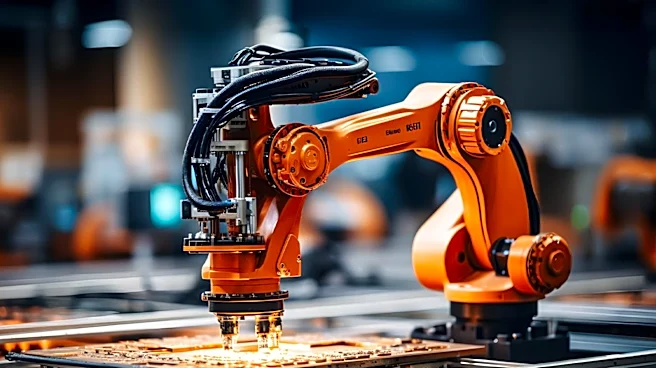
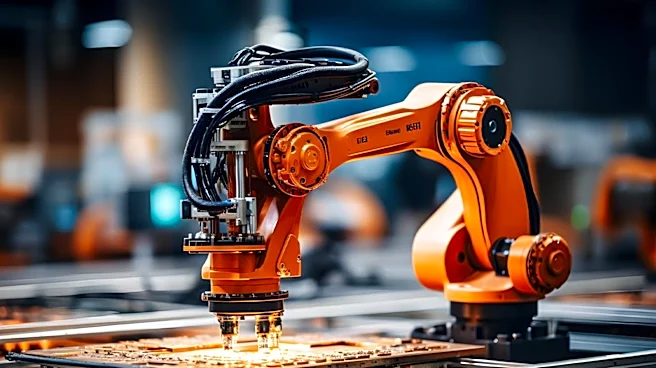
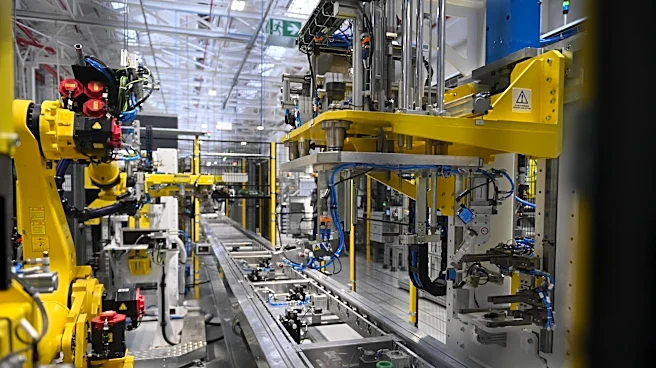
to understand complex, dynamic industrial environments by analyzing time-series data signals such as motion, vibration, temperature, and equipment behavior. This technology allows for the identification of variances and anomalies as they occur, moving beyond traditional post-production quality checks. The Newton model, a physical AI foundation model, fuses sensor data to automate decisions and support intelligent solutions directly within real-world manufacturing settings. This approach integrates human expertise with machine intelligence, providing frontline teams with timely and contextual insights to ensure compliance and improve production quality.
Why It's Important?
The adoption of physical AI in U.S. manufacturing holds significant importance for industries striving for higher quality, reliability, and productivity. By detecting potential quality concerns earlier in the workflow, physical AI can prevent costly delays, rework, and product scrapping, thereby reducing operational expenses and enhancing customer trust. This shift from quality control to 'quality confidence' empowers manufacturing operators with real-time data, allowing for immediate adjustments and proactive problem-solving. The ability of models like Newton to adapt to production environments using operational signals and workplan data offers a scalable path for applying AI to physical production workflows, potentially accelerating deployment and demonstrating quicker return on investment for manufacturing AI initiatives. This technological advancement is crucial for maintaining competitiveness and efficiency in the U.S. industrial sector.
What's Next?
The future of physical AI in U.S. manufacturing involves further integration of edge deployment strategies to ensure rapid and reliable decision-making on factory floors. Processing data onsite, closer to the equipment, reduces latency and dependence on external connectivity, which is critical for real-time responsiveness. This approach, combined with pretrained foundation models, is expected to shorten the path from concept to production for AI solutions, moving from months to weeks. As physical AI becomes more embedded in infrastructure, systems, data, and workflows, it will enable manufacturers to operationalize AI securely and at scale. The focus will be on transforming quality control into a continuous process of quality confidence, with ongoing efforts to refine how human experience and machine intelligence collaborate to optimize production outcomes.
Beyond the Headlines
The deeper implications of physical AI extend to a fundamental shift in how manufacturing operations are managed and perceived. This technology not only enhances efficiency but also redefines the role of human workers, moving them from reactive problem-solvers to proactive decision-makers supported by advanced insights. Ethical considerations may arise regarding data privacy and the autonomy of AI systems in critical production processes. Legally, there could be new frameworks needed to address accountability in automated decision-making. Culturally, the integration of physical AI fosters a more data-driven and adaptive manufacturing environment, potentially leading to new skill requirements for the workforce and a greater emphasis on continuous learning and technological literacy within industrial settings. This evolution signifies a long-term shift towards more intelligent, resilient, and self-optimizing production systems.