



What's Happening?
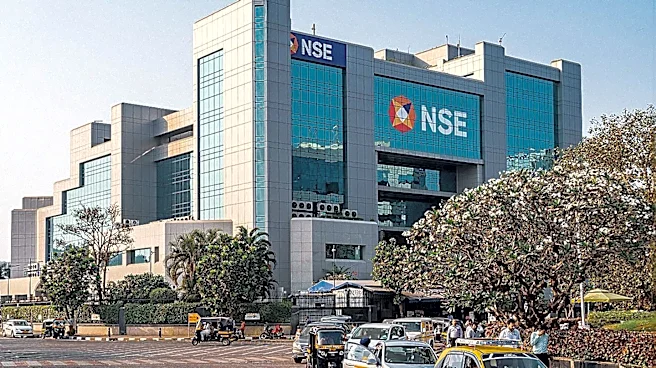
The India VIX, a volatility index for the Indian market, is calculated based on NIFTY Index Option prices. It measures the market's expectation of volatility over the near term, specifically the next 30 calendar days. The calculation methodology is adapted
from the Chicago Board Options Exchange (CBOE) method, with specific adjustments for the NIFTY options order book, including the use of cubic splines. Key factors in its computation include time to expiry, which is measured in minutes for precision, and the relevant tenure NSE MIBOR rate as the risk-free interest rate. The forward index level is used to identify out-of-the-money option contracts, and their best bid and ask quotes are utilized. If quotes are unavailable for certain strikes, values are interpolated using a 'Natural Cubic Spline' statistical method. The variance (volatility squared) is computed separately for near and mid-month expiries, then interpolated to achieve a single variance value for a constant 30-day maturity. The square root of this variance, multiplied by 100, yields the India VIX value. The 'VIX' trademark is owned by CBOE, and NSE has a license to use it for the India VIX.
Why It's Important?
The India VIX serves as a crucial indicator for market participants, reflecting the expected volatility of the NIFTY Index. For U.S. investors and financial institutions with exposure to Indian markets, understanding the India VIX provides insights into potential market risks and opportunities. High VIX values typically signal increased investor uncertainty and a higher likelihood of significant price swings, which can influence investment strategies, hedging decisions, and risk management practices. Conversely, a low VIX suggests a more stable market environment. The adoption of the CBOE methodology ensures a degree of comparability with global volatility benchmarks, allowing for more informed cross-market analysis. This transparency in calculation helps in assessing the risk premium associated with Indian equities and derivatives, impacting capital allocation decisions for international portfolios.
What's Next?
As the India VIX continues to be calculated and published, market participants will closely monitor its fluctuations for real-time insights into market sentiment and expected volatility. Financial analysts and traders will integrate these VIX values into their predictive models and trading algorithms to anticipate market movements. The ongoing use of the CBOE methodology suggests a continued alignment with international standards for volatility measurement, which could further enhance the index's credibility and utility for global investors. Future developments might involve refinements to the calculation methodology to adapt to evolving market structures or the introduction of new volatility-linked financial products, potentially offering more sophisticated hedging and speculative tools for managing risk in the Indian market.
Beyond the Headlines
The reliance on the CBOE methodology for calculating the India VIX highlights a broader trend of globalization in financial market infrastructure and risk management. By adopting internationally recognized standards, emerging markets like India can enhance their appeal to global investors, fostering greater integration into the world financial system. This standardization not only improves transparency but also facilitates the development of more complex financial instruments and strategies. The VIX, often dubbed the 'fear index,' also has psychological implications, as its movements can influence investor behavior and market narratives. A rising VIX can trigger a flight to safety, while a falling VIX might encourage risk-taking. This interplay between quantitative measurement and human psychology underscores the multifaceted impact of such indices on market dynamics and investor confidence.