







What's Happening?
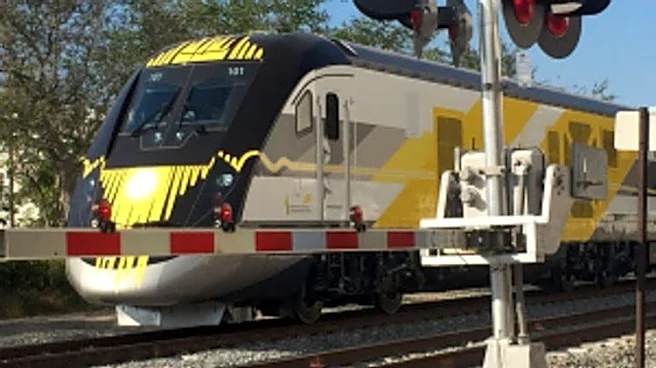
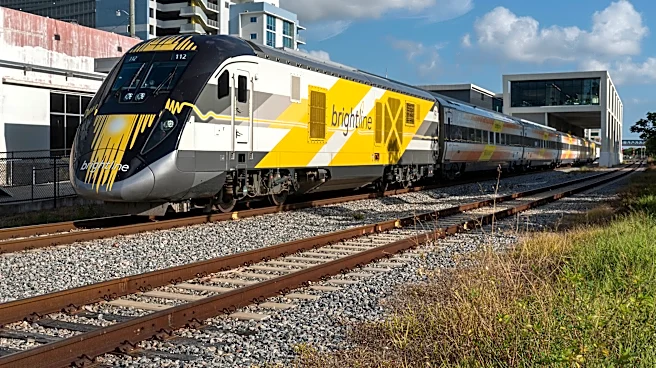
Brightline, the privately owned high-speed rail operator in Florida, has announced that some of its affiliated companies are filing for Chapter 11 bankruptcy protection. This move is part of a significant financial restructuring effort aimed at reducing
the company's debt and securing new financing. Despite these filings, Brightline has assured passengers that its train services between Miami and Orlando will continue without interruption. The company that directly operates the trains, Brightline Trains Florida LLC, is not part of the bankruptcy filing. The restructuring agreement includes securing an additional $490 million in new financing, comprising $350 million in new junior debt and $140 million in additional senior debt. This financial maneuver comes as Brightline's ridership and revenue, while growing, remain significantly below its initial projections for 2024. The company has invested over $5 billion in developing Florida's passenger rail system.
Why It's Important?
This debt restructuring is important for the U.S. transportation sector, particularly for the future of private high-speed rail initiatives. Brightline's ability to secure new financing and continue operations despite financial challenges demonstrates the complex nature of funding large-scale infrastructure projects. The discrepancy between projected and actual ridership highlights the risks and uncertainties involved in new transportation ventures, impacting investor confidence and future project development. The continued operation of Brightline's services is crucial for Florida's transportation network, offering an alternative to road travel in a rapidly growing state. The success or failure of this restructuring could set a precedent for other private infrastructure projects seeking to alleviate debt burdens and secure long-term viability, influencing how such projects are financed and managed across the nation.
What's Next?
Brightline's financial restructuring will proceed through bankruptcy court, with the company emphasizing that passenger services will remain unaffected. The immediate focus will be on finalizing the debt reduction and integrating the new $490 million in financing to stabilize the company's financial position. Brightline also maintains its long-term goal of extending its Florida service to Tampa, indicating continued expansion ambitions beyond the current restructuring. This financial process is distinct from Brightline West, which is developing a separate high-speed rail line between Las Vegas and Southern California, suggesting that the outcomes of this restructuring may not directly impact that project. Stakeholders, including creditors and investors, will closely monitor the bankruptcy proceedings and the company's ability to meet its revised financial targets and operational goals.
Beyond the Headlines
The situation with Brightline delves into the broader challenges of private sector involvement in public infrastructure, particularly in the U.S. The reliance on private capital for projects like high-speed rail often comes with ambitious projections that may not materialize, leading to financial strain. This case highlights the delicate balance between innovation in transportation and the economic realities of large-scale development. It also raises questions about the role of government support or guarantees in mitigating risks for such projects, especially when they serve a public good. The outcome of Brightline's restructuring could influence future policy discussions on public-private partnerships, regulatory frameworks for new transportation technologies, and the criteria for evaluating the long-term sustainability of private infrastructure investments in the U.S. The ethical considerations of balancing investor returns with public service continuity will also remain a key aspect of this ongoing development.