






What's Happening?
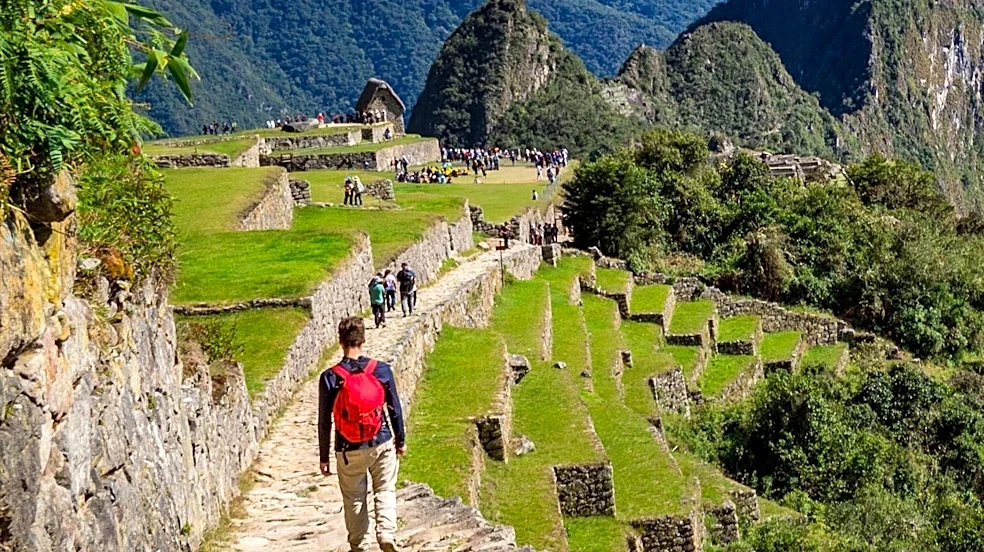
Odysseys Unlimited provides small group walking tours to some of the world's oldest historical sites, allowing travelers to experience ancient civilizations firsthand. These tours aim to bring history to life by enabling participants to walk through locations
such as Troy, Stonehenge, the Great Pyramid of Giza, and Olduvai Gorge. The company emphasizes deep engagement with these sites, often including visits to museums showcasing artifacts and providing expert local guides to illuminate the historical context. The tours cover a wide range of ancient periods and geographical locations, from the Minoan civilization in Akrotiri to the earliest traces of human habitation in Tanzania. The duration of these tours varies, and they are designed to offer an authentic connection with the past.
Why It's Important?
These walking tours are important because they offer a unique educational and cultural experience that goes beyond traditional learning methods. By physically visiting and walking through ancient sites, participants can gain a more tangible and immersive understanding of history, architecture, and human development. This direct engagement can foster a deeper appreciation for the achievements and challenges of past civilizations. Furthermore, such tours contribute to the preservation and awareness of these invaluable historical locations by generating tourism revenue that can support conservation efforts. They also promote cross-cultural understanding by exposing travelers to diverse historical narratives and the shared heritage of humanity. The small group format often allows for more personalized interaction and in-depth discussions, enhancing the overall learning experience.
What's Next?
The demand for experiential and educational travel, particularly to historical sites, is likely to continue growing. Odysseys Unlimited and similar tour operators may expand their offerings to include more lesser-known ancient sites or develop specialized tours focusing on specific historical themes or archaeological discoveries. There could be an increased integration of digital tools, such as virtual reality or augmented reality, to enhance the on-site experience, providing reconstructions of ancient structures or interactive historical narratives. The focus on sustainable tourism practices and responsible travel to sensitive historical environments will also become increasingly important. Collaborations with academic institutions and archaeological foundations could further enrich the educational content and authenticity of these tours, attracting a broader audience interested in historical and cultural immersion.
Beyond the Headlines
Beyond the immediate travel experience, these walking tours contribute to a broader understanding of human civilization and our place in history. By connecting with sites that span millennia, participants are encouraged to reflect on the continuity and evolution of human societies, technologies, and cultures. The act of walking through these ancient landscapes can evoke a sense of humility and wonder, highlighting the enduring legacy of our ancestors. It also underscores the importance of preserving these sites for future generations, recognizing them as irreplaceable records of human endeavor. The tours can inspire a deeper curiosity about archaeology, anthropology, and history, potentially encouraging further study or advocacy for cultural heritage. This form of travel transcends mere sightseeing, offering a profound journey into the collective human past.