





What's Happening?
The U.S. economy significantly surpassed job growth expectations in August, adding 162,000 nonfarm payrolls, which is considerably higher than the 53,000 economists polled by Dow Jones had anticipated. Additionally, job growth figures for June and July
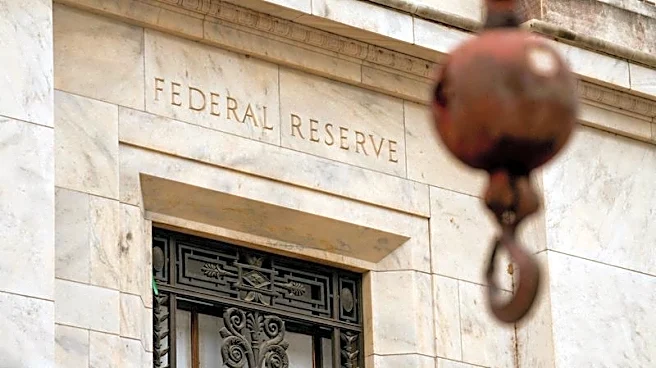
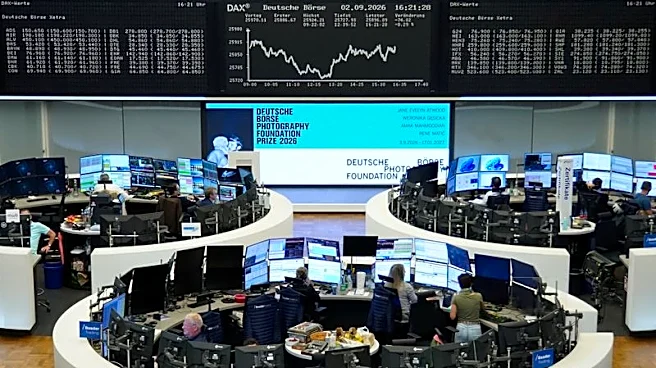
were revised upwards. This robust jobs report has intensified concerns among investors regarding a potential Federal Reserve rate hike. According to the CME Group's FedWatch tool, traders are now pricing in a 58% chance of a quarter-point rate increase within the next two weeks. Following the report, stock futures experienced a pullback, while Treasury yields rose. Strategists and economists are closely watching next week's inflation numbers, as a cooler-than-expected inflation print could alleviate some pressure on the Fed to act immediately, despite the strong labor market data. However, if inflation does not show a convincing downward trend, the Fed may feel compelled to take action to maintain its credibility.
Why It's Important?
This unexpected surge in job growth has significant implications for the U.S. economy and financial markets. A strong labor market, while generally positive, can contribute to inflationary pressures, making the Federal Reserve's job of balancing economic growth with price stability more challenging. The increased likelihood of a rate hike could lead to higher borrowing costs for businesses and consumers, potentially impacting investment, spending, and overall economic activity. Sectors with high AI adoption, such as information and financial services, showed weaker performance, while sectors involved in building and powering data centers, like construction, manufacturing, and utilities, were stronger. This suggests a potential shift in economic drivers, with AI displacement in some areas being offset by growth in infrastructure supporting new technologies. The market's reaction, with rising Treasury yields and falling stock futures, indicates investor apprehension about the potential for tighter monetary policy and its effects on asset valuations.
What's Next?
The immediate focus for financial markets and the Federal Reserve will be on the upcoming inflation report. If inflation data comes in lower than expected, the Fed might feel less urgency to raise interest rates, potentially easing market concerns. Conversely, if inflation remains stubbornly high, the strong jobs report provides the Fed with more justification to proceed with a rate hike in September. This decision will be crucial for the trajectory of the U.S. economy, influencing everything from consumer lending rates to corporate investment strategies. Market participants will be closely analyzing the Fed's communications and any further economic indicators to gauge the likelihood and timing of future monetary policy adjustments. The ongoing debate about a wage-price spiral will also continue, as average hourly earnings have not yet shown clear signs of accelerating despite the robust job growth.
Beyond the Headlines
The August jobs report highlights a complex interplay between labor market strength, inflation concerns, and the evolving impact of artificial intelligence on the economy. The observation that sectors with high AI adoption were weaker, while those supporting AI infrastructure were stronger, suggests a potential structural shift in the labor market. This could lead to a 'K-shaped' recovery, where certain segments of the workforce and economy thrive due to technological advancements, while others face displacement or stagnation. The Fed's challenge extends beyond managing short-term economic cycles; it also involves navigating these deeper structural changes. The credibility of the Federal Reserve in managing inflation, especially after recent hawkish statements, is also at stake. Its actions in the coming weeks will not only influence immediate market conditions but also shape long-term expectations about its commitment to price stability and its ability to adapt to a rapidly changing economic landscape.