
What's Happening?
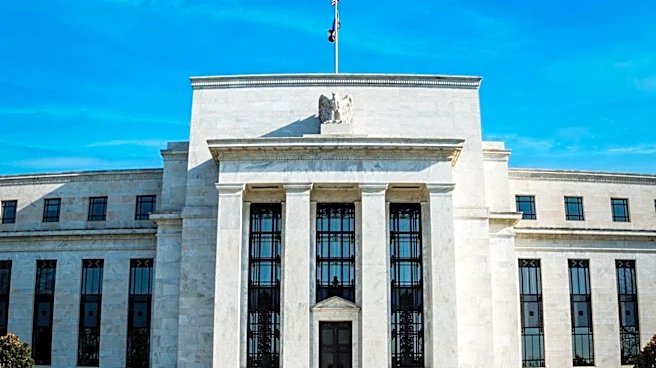
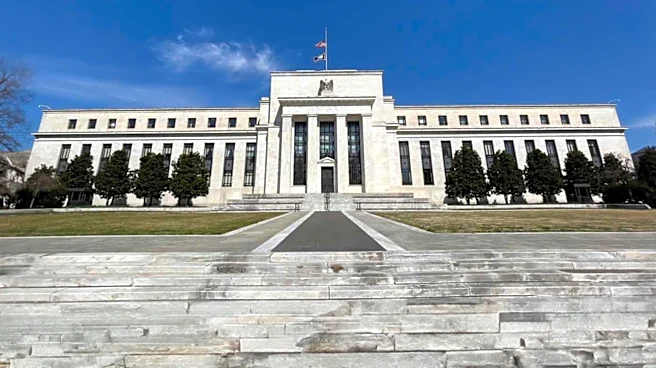
Kansas City Fed President Jeff Schmid has indicated that there is little evidence suggesting wages are significantly contributing to inflation, a perspective that contrasts with some 'hawk' views within
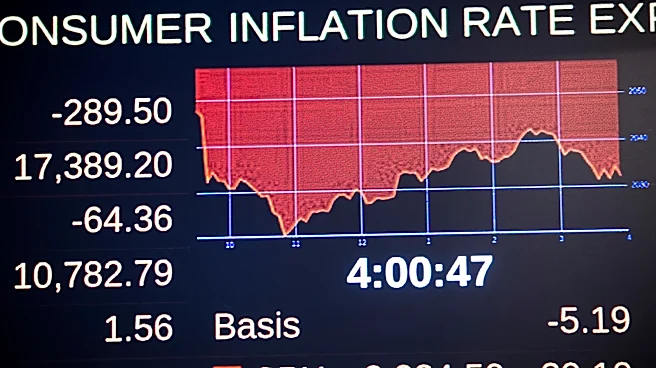
the Federal Reserve. This assessment comes as the Federal Reserve considers further interest rate hikes, with some officials, like Governor Christopher Waller, suggesting a half-point increase might be necessary if the consumer price index (excluding food and energy) continues to rise at a pace of 0.3% or more monthly. Despite the spread of inflation beyond oil, food, and energy, Schmid's view highlights a nuanced understanding of the current economic landscape. The job market, which previously had about two job openings for every unemployed person, now stands at a more balanced one-to-one ratio, according to Schmid. This shift suggests that further cooling of the job market is more likely to result in increased unemployment through layoffs or slower hiring, rather than a gentle reduction in job openings.
Why It's Important?
President Schmid's assessment is important because it challenges the narrative that a wage-price spiral is a primary driver of current inflation. If wages are not a significant factor, then aggressive interest rate hikes aimed at curbing wage growth might be misdirected and could lead to unnecessary economic contraction and job losses. The Federal Reserve's monetary policy decisions have broad implications for the U.S. economy, affecting borrowing costs for consumers and businesses, investment, and employment levels. Over-tightening could disproportionately impact low-wage workers, as a Boston Fed working paper suggests, by adding the risk of layoffs to existing price pressures. Schmid's perspective, therefore, advocates for a more cautious approach, emphasizing that the costs of holding rates steady might be less than the risks associated with tightening too aggressively, especially when other economic indicators, such as mortgage rates and consumer spending, already show signs of strain.
What's Next?
The Federal Reserve is expected to continue its deliberations on interest rate policy, with a potential rate hike anticipated. The debate within the Fed will likely center on the interpretation of various economic indicators, including inflation data, wage growth, and employment figures. Officials will need to weigh the risks of persistent inflation against the potential for an economic downturn caused by overly aggressive monetary tightening. Future decisions will depend on upcoming economic data, such as core PCE reports and household inflation expectations. If the committee decides to raise rates, there will be scrutiny on whether it opts for a quarter-point or a half-point increase, and whether it signals further hikes in subsequent meetings. The impact of these decisions will be closely watched by financial markets, businesses, and consumers, as they will influence borrowing costs, investment decisions, and overall economic stability.
Beyond the Headlines
The differing views within the Federal Reserve, exemplified by President Schmid's stance, highlight a fundamental tension in monetary policy: how to effectively combat inflation without triggering a recession. This debate extends beyond mere economic statistics, touching upon the ethical implications of policy decisions on different segments of the population. The potential for disproportionate impact on low-wage workers underscores a social dimension to monetary policy, where the burden of economic adjustments can fall unevenly. Furthermore, the discussion about whether inflation is 'spreading' or 'spiraling' points to the complexity of diagnosing economic conditions in a post-pandemic, geopolitically volatile environment. The long-term implications could include a re-evaluation of the tools and indicators the Fed uses to guide its decisions, potentially leading to a more nuanced framework that considers social equity alongside traditional economic metrics.