






What's Happening?
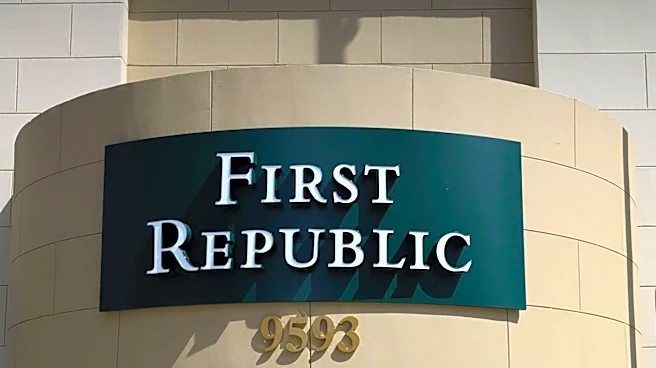
JPMorgan Chase is set to eliminate 335 temporary contract positions across two of its San Francisco offices. These layoffs are a direct consequence of the bank's integration efforts following its acquisition of the failed lender First Republic in May
2023. The affected roles were primarily in support of this integration process. Specifically, 80 employees at 111 Pine St. and 255 employees at 1 Front St., which previously served as First Republic's headquarters, will be impacted. Employees were initially informed in May 2023 that their temporary roles would conclude, though they were also given the opportunity to apply for approximately 13,000 open positions within JPMorgan Chase. The official notice of these terminations was filed on November 8, with the layoffs scheduled to commence on January 10. Despite these cuts, JPMorgan Chase maintains a significant presence in the Bay Area, employing around 6,800 individuals.
Why It's Important?
These layoffs highlight the ongoing consolidation and restructuring within the banking sector, particularly after significant acquisitions of distressed financial institutions. For the affected employees, it represents job displacement and the challenge of securing new employment, despite JPMorgan's offer of internal opportunities. For the broader San Francisco economy, while 335 jobs may not drastically alter the overall employment landscape, it contributes to a narrative of job market fluidity in the tech and finance sectors. For JPMorgan Chase, these cuts signify the completion of a phase in the First Republic integration, aiming to streamline operations and reduce redundant roles, ultimately impacting the bank's operational efficiency and cost structure. It also reflects the typical post-merger strategy where temporary roles created for integration are phased out once the process is sufficiently advanced.
What's Next?
The 335 affected employees will face job termination starting January 10, prompting them to seek new employment opportunities. JPMorgan Chase will continue its integration of First Republic's assets and operations, likely focusing on optimizing its workforce and operational footprint in the Bay Area. The bank's ongoing presence in the region, with 6,800 employees, suggests a continued commitment to the market, albeit with a more streamlined structure post-acquisition. Other financial institutions may observe these developments as a case study in post-acquisition workforce management, particularly concerning temporary contract roles. The broader San Francisco job market will absorb these individuals, with many potentially seeking roles within other financial services firms or related industries.
Beyond the Headlines
The reduction in temporary staff following a major bank acquisition underscores the precarious nature of contract employment, especially in large-scale corporate integrations. While such roles are crucial during transitional periods, they often lack the long-term security of permanent positions. This situation also reflects the broader trend of efficiency drives within the financial industry, where cost-cutting and operational synergies are paramount after mergers and acquisitions. The impact extends beyond the immediate job losses, potentially influencing employee morale and perceptions of job security within the wider banking sector. It also raises questions about the social responsibility of large corporations during such transitions, even when offering alternative employment opportunities, as the disruption to individuals' careers and lives can be significant.