






What's Happening?
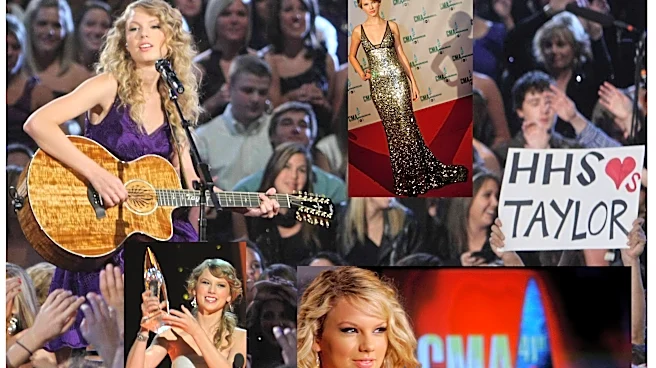
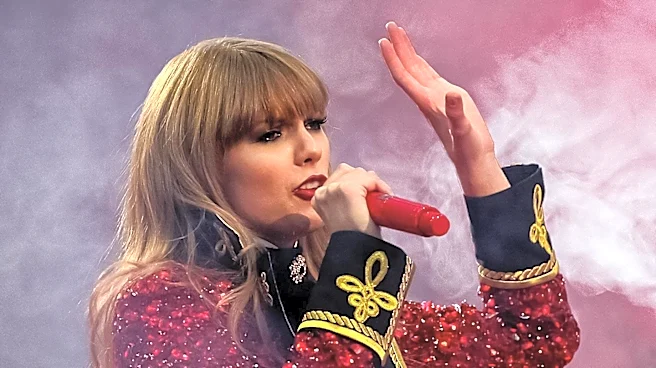
Taylor Swift, a multi-platinum, award-winning singer-songwriter, has been recognized for her confessional and emotionally charged songwriting style. Born in Reading, Pennsylvania, on December 13, 1989, Swift began her music career at a young age, eventually
moving to Nashville to pursue a recording contract. Her breakthrough came with her second album, "Fearless," released in 2008, which earned her four Grammy Awards, including Album of the Year, making her the youngest artist at the time to receive this honor. Swift has released seven studio albums, transitioning from country to pop with her album "1989." Beyond her musical achievements, she is a vocal advocate for artists' rights, a prominent voice on social media, and an active philanthropist. Her career has seen her address industry sexism and champion fair compensation for streaming and songwriting credits, including testifying before the U.S. Senate regarding the Music Modernization Act.
Why It's Important?
Taylor Swift's career is significant not only for her musical success but also for her substantial impact on the music industry's business practices and artist advocacy. Her transition from country to pop with albums like "1989" demonstrated a strategic evolution that broadened her appeal and set new benchmarks for album sales, making her the first woman to have four albums sell over one million copies in a week. Her outspoken stance on artists' rights, particularly concerning fair compensation for streaming and songwriting, has brought critical attention to issues affecting countless musicians. By using her platform to address industry sexism and advocate for legislative changes like the Music Modernization Act, Swift has empowered other artists and influenced policy discussions around intellectual property and fair compensation in the digital age. Her philanthropic efforts further underscore her broader societal influence, extending beyond entertainment into social justice and community support.
What's Next?
Given Taylor Swift's ongoing influence, it is anticipated that she will continue to release new music and potentially re-record her earlier albums, a strategy that has already proven successful in reclaiming ownership of her work. Her advocacy for artists' rights is likely to persist, potentially leading to further engagement with legislative bodies or industry organizations to push for more equitable practices in music streaming and publishing. As a prominent figure on social media, she will likely maintain her role as a powerful voice on various social and political issues, continuing to inspire her global fanbase. Her philanthropic endeavors are also expected to continue, with potential new initiatives or increased support for causes she champions, such as women's rights, LGBTQ+ rights, and music education. Her actions will likely continue to shape industry standards and inspire a new generation of artists and activists.
Beyond the Headlines
Taylor Swift's journey highlights a deeper narrative about artistic control and the evolving power dynamics within the music industry. Her decision to re-record her early albums, for instance, is a powerful statement on intellectual property rights and an artist's ability to control their creative legacy in an era dominated by corporate ownership. This move has set a precedent, encouraging other artists to consider similar strategies to gain more autonomy over their work. Furthermore, her consistent use of her platform to advocate for social justice issues, including LGBTQ+ rights and racial equality, demonstrates the increasing expectation for public figures to engage with broader societal concerns. This engagement transcends mere celebrity endorsement, positioning her as a cultural force capable of influencing public discourse and inspiring collective action, thereby shaping the ethical and cultural landscape of contemporary entertainment.