






What's Happening?
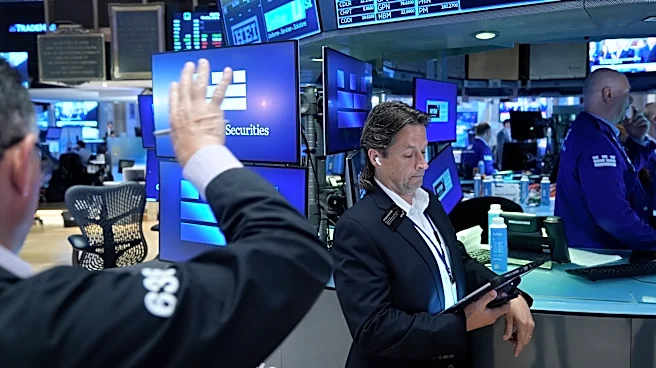
JPMorgan Chase, Bank of America, Goldman Sachs, Citigroup, and Wells Fargo have reported strong second-quarter earnings, benefiting from a surge in dealmaking and active capital markets. Investment banking emerged as a major growth driver, with significant
gains in advisory fees, underwriting revenue, and trading activity. Goldman Sachs highlighted its strongest deal backlog in five years, while JPMorgan CEO Jamie Dimon noted AI's role in workforce reductions and productivity improvements. Bank executives expressed confidence in the U.S. economy, citing business investment and consumer spending as supportive factors.
Why It's Important?
The robust earnings reports from these major banks underscore the strength of the U.S. financial sector, driven by increased corporate activity and technological advancements. The integration of AI in banking operations is enhancing efficiency and client services, positioning these institutions for future growth. However, the reliance on dealmaking and trading activities highlights potential vulnerabilities to market fluctuations. The banks' confidence in the economy suggests a positive outlook, but geopolitical uncertainties and market cycles remain potential risks.
What's Next?
As these banks continue to leverage AI and capitalize on dealmaking opportunities, they may face challenges in maintaining growth if market conditions change. The focus on AI-driven transformation will likely continue, with banks investing in technology to enhance services and reduce costs. Stakeholders will be monitoring how these institutions navigate potential economic shifts and regulatory changes, particularly in the context of AI integration and market dynamics.