







What's Happening?
Boeing has reported a larger-than-expected loss for the second quarter, primarily due to increased costs associated with the Air Force One program. The company took a $280 million loss on the program, which involves delivering two 747s to serve as the next-generation
Air Force One aircraft. Despite the financial setback, Boeing's revenue increased by 8% year-over-year, driven by higher commercial aircraft deliveries. The company remains focused on improving its competitiveness and achieving key milestones in its aircraft certification programs.
Why It's Important?
Boeing's financial performance highlights the challenges faced by major aerospace manufacturers in managing complex government contracts and development programs. The increased costs associated with the Air Force One program underscore the financial risks involved in such projects. However, the company's revenue growth and improved cash flow indicate resilience in its core commercial aircraft business. Boeing's ability to navigate these challenges will be crucial for its long-term competitiveness and financial stability, impacting stakeholders across the aerospace industry.
What's Next?
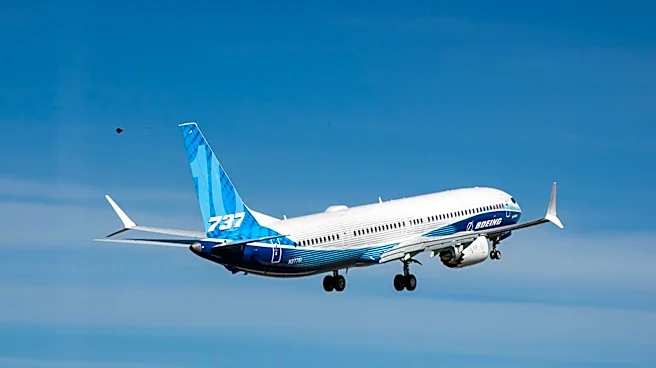
Boeing's focus will be on managing costs and achieving key milestones in its aircraft certification programs, including the 737 Max 7 and 777X. The company's leadership will likely face questions from analysts regarding its strategy to address financial challenges and enhance operational efficiency. Stakeholders will be watching for updates on Boeing's progress in delivering the Air Force One aircraft and its broader efforts to strengthen its market position. The aerospace industry will continue to monitor Boeing's performance and strategic initiatives.