



What's Happening?
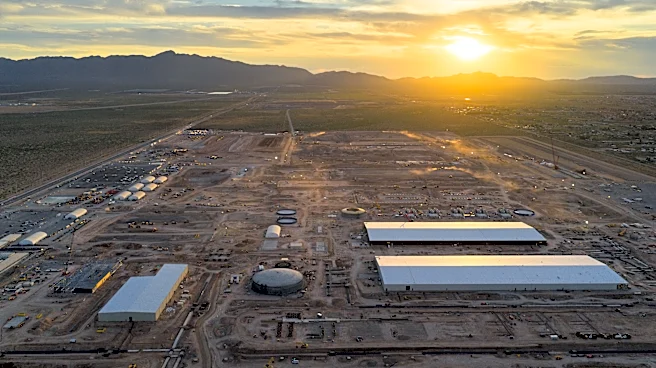
Hut 8 (HUT) stock experienced a significant jump after securing long-term data center leases with NVIDIA. These agreements reportedly cover Hut 8’s entire 1-gigawatt Texas data center, with base terms and renewal options potentially reaching up to $50
billion over 30 years. This marks a strategic shift for Hut 8, traditionally known as a Bitcoin miner, towards becoming a power-first AI infrastructure company. Additionally, Hut 8's Beacon Point campus in Nueces County, Texas, another 1-gigawatt AI site, is now fully commercialized. The company has signed a second 15-year lease for $9.8 billion, providing 352 megawatts of capacity, bringing the campus's total contracted capacity to 704 megawatts with an investment-grade tenant. This development has garnered positive attention from Wall Street, with firms like Piper Sandler, Benchmark, and Morgan Stanley raising their price targets and issuing bullish calls on Hut 8 stock, recognizing its pivot towards AI data center trends.
Why It's Important?
This strategic pivot by Hut 8 is important as it signifies a broader trend in the digital infrastructure sector, where companies are diversifying from cryptocurrency mining into high-demand AI data center services. The long-term leases with a major technology company like NVIDIA provide Hut 8 with substantial revenue visibility and stability, a contrast to the often-volatile nature of pure crypto mining. This move positions Hut 8 to capitalize on the rapidly expanding artificial intelligence market, which requires significant computational power and specialized data center infrastructure. The shift also highlights the increasing demand for robust and reliable power solutions for AI operations, as Hut 8 emphasizes its 'power-first' approach. For investors, this transition offers a potentially more stable and growth-oriented investment opportunity compared to companies solely focused on Bitcoin mining, which is subject to cryptocurrency market fluctuations. The positive analyst sentiment and increased price targets reflect a market belief in the long-term value creation from this strategic reorientation.
What's Next?
Hut 8 is expected to continue its transition into a leading AI infrastructure provider, with further development and commercialization of its data center campuses. The company's focus on securing electricity and land, then commercializing it for AI data centers, suggests ongoing expansion in this sector. Investors will be closely watching the ramp-up of revenue from these new long-term leases and the execution of additional AI infrastructure deals. The company's ability to avoid major supply chain delays and gain support from Texas regulators for grid reliability will be crucial for its continued success. Future announcements regarding new contracts, capacity expansions, and financial performance related to its AI data center operations will be key indicators of its progress. The market will also assess how Hut 8 manages its capital expenditure during this 'heavy build mode' and how quickly it can achieve profitability from its new ventures, balancing near-term losses with long-term growth potential.
Beyond the Headlines
The shift by Hut 8 from Bitcoin mining to AI data centers reflects a significant evolution in the digital asset and technology sectors. It underscores the growing convergence of energy infrastructure, digital computing, and advanced AI applications. This transition highlights the increasing recognition that the underlying infrastructure developed for energy-intensive cryptocurrency operations can be repurposed and optimized for other high-demand computing needs, particularly AI. The emphasis on 'power-first' infrastructure also points to the critical role of reliable and scalable energy solutions in the future of AI development. Furthermore, the involvement of Texas regulators in scrutinizing data center interconnections suggests a growing awareness and potential for increased regulatory oversight in the energy consumption and grid impact of large-scale data centers. This could lead to new standards and requirements for energy efficiency and grid integration for all data center operators, influencing future investment and development strategies in the sector.