



What's Happening?
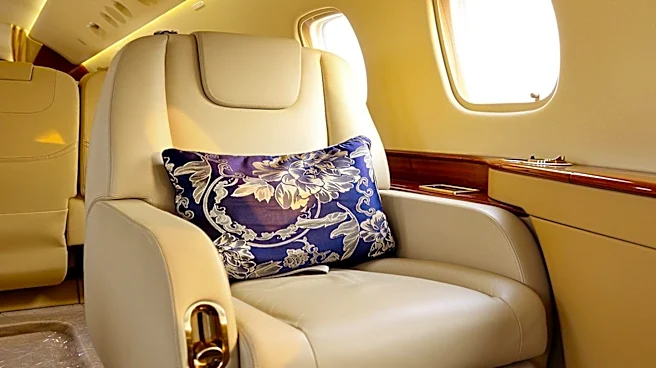
Delta Air Lines is significantly expanding its first-class offerings, with a notable example being an Airbus A321neo featuring 44 domestic first-class recliners, occupying nearly half of the aircraft. This is a substantial increase compared to the typical
20 first-class seats on most of Delta's single-aisle planes. The airline views this as an 'experiment' to determine the optimal size for future first-class cabins, driven by consistently high demand, with approximately 80% of these expanded first-class seats being filled on average. This move is part of a broader strategy to offer more premium seating across its fleet, with plans to increase premium seats by nearly 8% by 2025 and continue this trend into 2027 with the introduction of the new Airbus A350-1000, which will feature next-generation Delta One business-class suites. The airline is also considering a more luxurious 'business-class plus' product, similar to offerings from rivals like United Airlines.
Why It's Important?
This strategic shift by Delta Air Lines reflects a significant trend in the U.S. airline industry: a growing willingness among passengers to pay for premium travel experiences. For Delta, this translates into a stronger bottom line, as premium seats typically yield higher revenue per passenger. The expansion of first-class and potential introduction of 'business-class plus' products could intensify competition among major U.S. carriers, pushing others to innovate their premium offerings to retain and attract high-value customers. While beneficial for the airline's profitability, this trend could lead to fewer economy seats overall, potentially impacting budget-conscious travelers and making complimentary upgrades for Medallion elite status members more challenging to secure. The airline's 'experiment' with larger first-class cabins provides valuable data on consumer preferences and market demand for luxury air travel within the U.S.
What's Next?
Delta Air Lines plans to continue expanding its premium seating options, with future Boeing 737 MAX 10 jets expected to feature 24 first-class recliners, a 20% increase over current configurations. The airline will also introduce its new Airbus A350-1000 in 2027, which will be its most premium long-haul jet, equipped with next-generation Delta One business-class suites. Delta's chief commercial officer, Joe Esposito, indicated that the airline is continuously exploring innovations in cabin design and has not ruled out the development of an 'extra-luxe' Delta One product to compete with offerings from other global carriers. This suggests a continued focus on enhancing the premium passenger experience and potentially introducing new, more luxurious seating options in the coming years.
Beyond the Headlines
The increasing emphasis on premium cabins by Delta Air Lines highlights a broader societal trend towards experiential luxury and personalized services, even in sectors like air travel. This shift could exacerbate the divide between different classes of travelers, with a more comfortable and exclusive experience for those who can afford it, and potentially a more constrained experience for economy passengers due to fewer available seats. Ethically, this raises questions about accessibility and equity in air travel, as airlines prioritize higher-paying customers. Culturally, it reinforces the perception of air travel as a tiered service, moving further away from a more egalitarian model. The long-term implication could be a redefinition of standard air travel, where premium services become the benchmark for comfort and convenience, while basic economy offerings become increasingly minimalist.