




What's Happening?
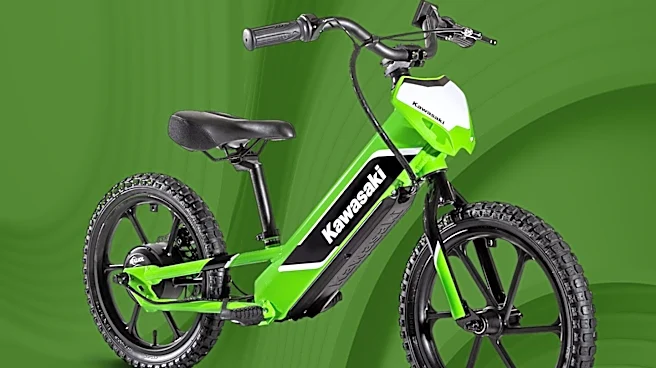
Black Friday 2026 features a variety of deals on kids' electric bikes, ranging from electric balance bikes to compact e-bikes for teenagers. Models like the Himiway C1, Hiboy BK1, STACYC 16eDRIVE, Retrospec Valen Rev 14, and Schwinn Hurricane are among
those highlighted. Parents are advised to consider factors beyond just discounts, including the child's age, height, riding experience, motor power, maximum speed, braking performance, and battery safety. Independent testing, such as that conducted by Two Wheeling Tots, provides insights into real-world performance and limitations of various models. For instance, the Retrospec Valen Rev 14 is noted for its responsive motor and strong brakes, while the Schwinn Hurricane offers practical features like automatic lights and a removable battery. Many deals offer significant savings, such as the GOTRAX Fitz16 at $399, a $200 discount, and the Bluejay WILD with a 30% reduction.
Why It's Important?
The growing popularity of kids' electric bikes brings important safety and regulatory considerations to the forefront. The American Academy of Pediatrics (AAP) recommends against e-bike use for children under 12, suggesting Class 1 e-bikes for riders aged 12-15 and Class 1 or 2 for those 16 and older. This guidance often contrasts with manufacturers' age recommendations, creating a dilemma for parents. Furthermore, the legal classification of these bikes varies significantly; pedal-free electric balance bikes may not qualify as conventional e-bikes and could be subject to different motorized vehicle regulations, impacting where they can be legally ridden. Battery safety, particularly concerning lithium-ion batteries, is another critical aspect, with certifications like UL 2849 and UL 2271 being important but not comprehensive indicators of overall safety. These factors underscore the need for informed purchasing decisions to ensure child safety and compliance with local laws.
What's Next?
Parents considering a kids' electric bike purchase are urged to prioritize safety over promotional pricing. This involves thoroughly checking recommended age and speed guidelines, understanding the distinctions between Class 1, 2, and 3 e-bikes, and verifying local regulations regarding their use. Evaluating the bike's fit for the child, the effectiveness of its braking system, and the battery's certification and charging safety are crucial next steps. Given that some advertised Black Friday deals may involve sold-out inventory or varying retailer prices, consumers should confirm availability and actual costs. The ongoing evolution of e-bike technology and its adoption by younger riders will likely lead to continued discussions and potential updates in safety standards and legal frameworks.
Beyond the Headlines
The surge in kids' electric bike sales reflects broader trends in personal mobility and technology adoption, but it also highlights a societal challenge in balancing innovation with safety, especially for minors. The discrepancy between manufacturer marketing and pediatric safety recommendations points to a need for clearer industry standards and public education. This situation could lead to increased regulatory scrutiny and calls for more stringent age and usage restrictions. Moreover, the environmental implications of e-bike manufacturing and battery disposal, though not explicitly detailed, are an underlying concern as these products become more prevalent. The debate over kids' e-bikes is not just about a product; it's about how society integrates new technologies responsibly, particularly when children are involved.