

What's Happening?
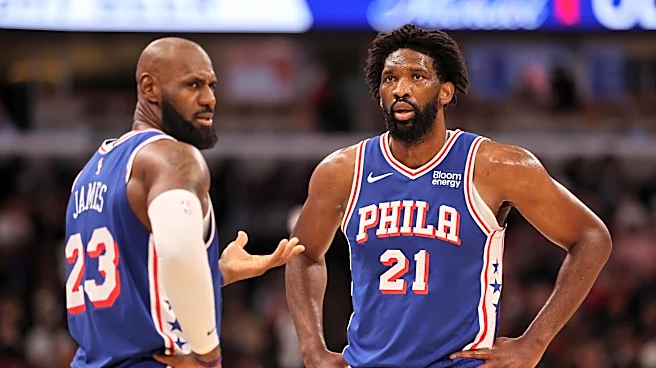
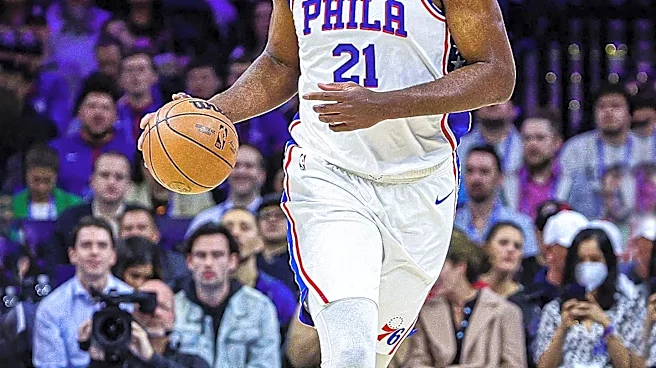
Joel Embiid, a prominent player for the Philadelphia 76ers, is increasingly being recognized for his defensive contributions, which are now considered as valuable as his offensive scoring. While Embiid has historically been an offensive powerhouse, his shot-swatting
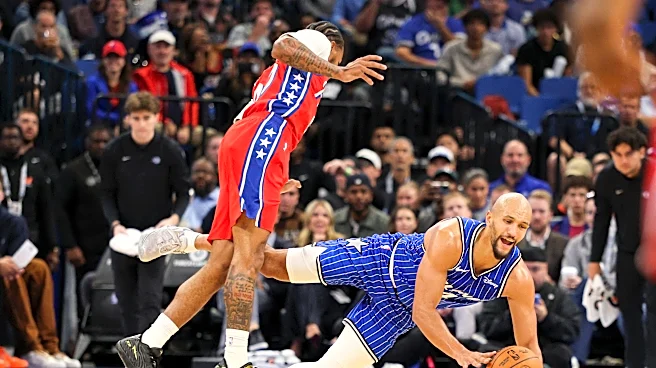
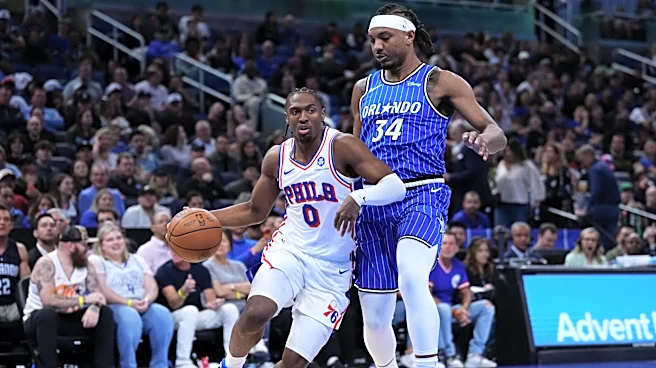
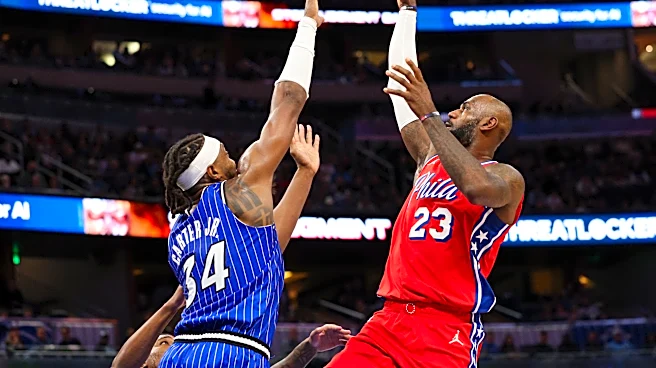
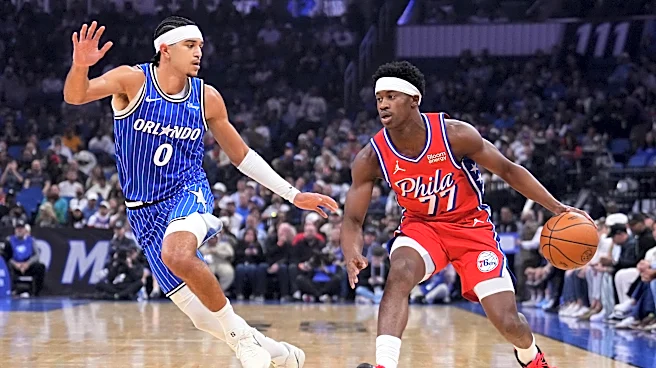
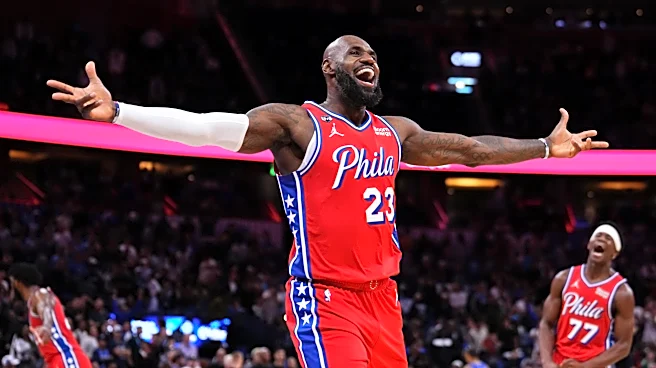
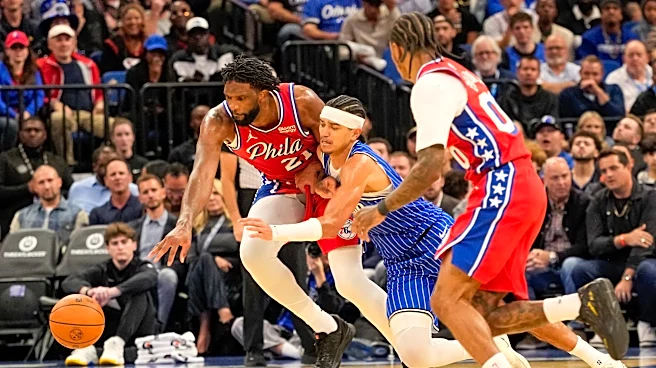
abilities and paint presence are becoming essential for the team's success. The 76ers have started the season with an impressive 13-3 record, leading the Eastern Conference and currently on a four-game winning streak. This strong start is attributed to a balanced roster where offensive responsibilities are shared among players like Tyrese Maxey, LeBron James, Jaylen Brown, and VJ Edgecombe. However, the team's lack of depth at the center position means Embiid's defensive performance is critical. In a recent 121-116 victory against the Orlando Magic, Embiid scored 26 points but also recorded 2 steals and 3 blocks, which were highlighted as catalysts for the win. His defensive presence deterred the Magic from attacking the interior, forcing them to rely on perimeter shots.
Why It's Important?
The shift in emphasis towards Joel Embiid's defensive capabilities is significant for the Philadelphia 76ers' pursuit of an NBA championship. While his scoring has always been elite, the team's current roster composition allows for a more distributed offensive attack, making his defensive impact even more valuable. Embiid's ability to protect the rim and disrupt opponents' offensive flow provides a stable foundation for the team's high-powered offense. His presence in the paint forces opposing teams to alter their strategies, often leading them to take less efficient shots from beyond the arc and limiting second-chance opportunities. This defensive anchor is crucial for a team aiming for deep playoff runs, as strong defense often dictates success in high-stakes games. Without Embiid's defensive prowess, the 76ers would be significantly more vulnerable, especially given the current lack of proven intimidating rim protectors on their roster beyond him.
What's Next?
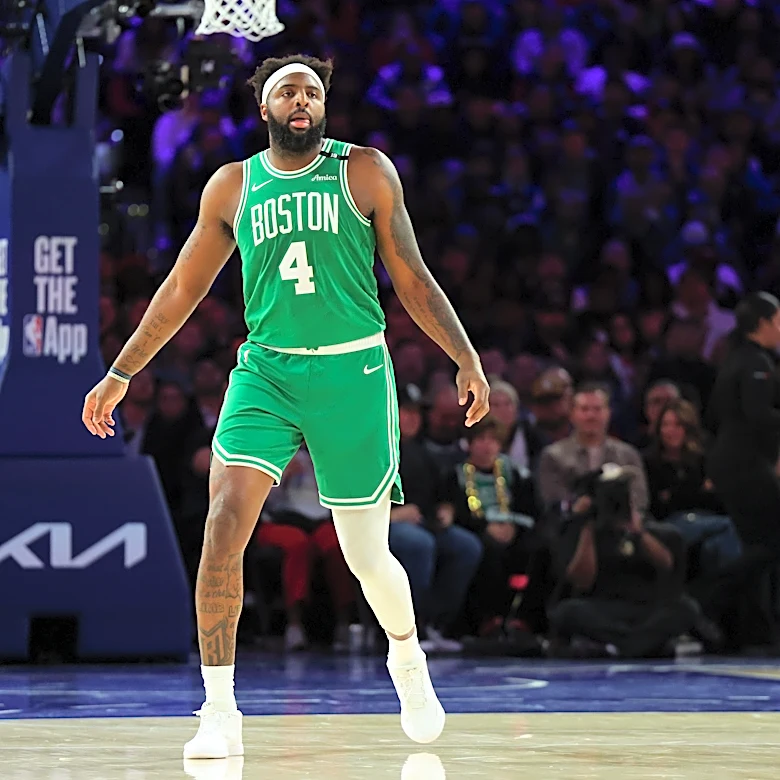
Moving forward, the Philadelphia 76ers will likely continue to rely heavily on Joel Embiid's defensive contributions as they aim to maintain their strong start and contend for a championship. The team's strategy will probably involve maximizing his defensive impact while allowing other offensive talents to shoulder scoring responsibilities. This approach could lead to Embiid focusing more on defensive plays, such as blocks and steals, which can demoralize opponents and create fast-break opportunities. The coaching staff will need to manage his minutes and physical conditioning carefully, given his injury-plagued career, to ensure he remains effective on both ends of the court throughout the season and into the playoffs. Opposing teams will also need to devise strategies to counter Embiid's defensive presence, potentially by employing more perimeter-oriented offenses or attempting to draw him out of the paint. The development of other big men on the roster, such as Adem Bona and Tacko Fall, will also be crucial to provide Embiid with rest and maintain defensive intensity when he is off the court.
Beyond the Headlines
The evolving role of Joel Embiid highlights a broader trend in modern basketball where versatility and defensive impact are increasingly valued alongside offensive firepower. For years, Embiid was primarily known for his scoring, but his current emphasis on defense reflects a strategic adaptation by the 76ers to optimize their championship chances. This shift also underscores the psychological aspect of the game, where a dominant defensive presence like Embiid can instill fear in opponents and dictate their offensive choices. His ability to alter shots and control the paint can have a ripple effect, boosting his teammates' confidence and allowing them to take more risks on offense. Furthermore, this development could influence how future big men are scouted and developed, emphasizing a more balanced skill set that includes elite defense. It also raises questions about player longevity and how stars can adapt their game to remain effective as they age or as team dynamics change, moving beyond their primary perceived strengths to contribute in other critical areas.