






What's Happening?
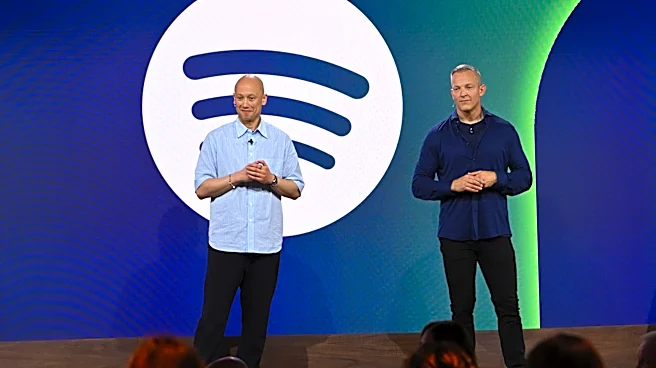
Spotify has announced record-breaking figures for the third quarter of 2026, with 788 million monthly active users and 306 million Premium subscribers. According to Alex Norström, co-CEO of Spotify, these results demonstrate that the company has delivered
on its promises, with sustained business growth and moderating costs. The platform saw an 11% year-over-year increase in monthly active users and a 9% rise in paid accounts. Total revenues reached 5 billion euros, marking a 16% increase from the same period in 2025. The gross margin improved to 33%, and operating profit hit 672 million euros. This growth is attributed to the daily dependency users have on audio content, which has allowed Spotify to maintain subscriber numbers even with price increases, unlike video streaming services.
Why It's Important?
These results highlight Spotify's strong position in the audio streaming market, demonstrating its ability to grow its user base and revenue despite economic pressures and subscription fatigue observed in other sectors. The continued growth in Premium subscribers, even with price hikes, indicates a robust user loyalty and perceived value of the service. This performance could influence investor confidence and potentially set a benchmark for other subscription-based digital content platforms. The company's success in Latin America, which accounts for a significant portion of its user base and subscriptions, underscores the importance of diverse market penetration for global tech companies. Furthermore, the increasing consumption of non-music content, such as video podcasts and audiobooks, suggests a successful diversification strategy that could further solidify Spotify's market dominance.
What's Next?
Spotify plans to expand its audiobook offerings to over 180 markets before the end of 2026, which is expected to be a key driver for future growth. The company will also be closely watched for its fourth-quarter 2026 results to assess the impact of this audiobook expansion and the continued growth of video podcasts. The success of these initiatives will determine if non-music content can compensate for the maturing music segment. The company's strategy of investing in opportunities while moderating costs will likely continue, aiming for sustained profitability. Future price adjustments will also be a critical factor, as the company evaluates how much more it can increase prices before impacting its subscriber base.
Beyond the Headlines
Spotify's sustained growth in a competitive digital content landscape points to a broader trend of audio content's resilience and unique consumer engagement. Unlike video streaming, where content libraries and new releases often drive subscriptions, audio platforms like Spotify benefit from daily user habits and personalized libraries built over time, creating a higher barrier to cancellation. This suggests a fundamental difference in how consumers value and integrate audio into their daily lives compared to visual media. The company's focus on expanding into audiobooks and video podcasts also reflects a strategic move to capture more of users' 'audio time,' potentially shifting engagement away from competitors like YouTube. This diversification could lead to a more comprehensive audio ecosystem, further entrenching Spotify in the digital media consumption habits of its users.