






What's Happening?
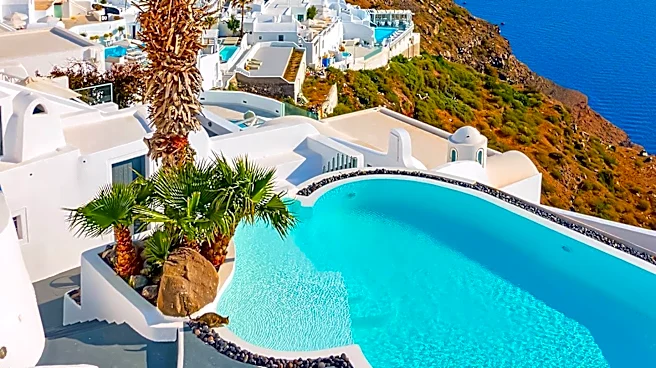
Santorini, Greece, a popular tourist destination known for its white-washed streets, blue domes, and sunsets, is increasingly offering a more tranquil experience for visitors, particularly outside of the peak summer months. Despite attracting approximately
3.4 million visitors annually against a resident population of 15,500, efforts are being made to manage tourism. For instance, the island has capped daily cruise visitors at 8,000 and introduced a peak-season disembarkation tax. Travelers are finding that by choosing accommodations slightly removed from the busiest areas, such as the Santo Collection on the outskirts of Oia, or visiting during the shoulder seasons like late May, June, or September/October, they can enjoy the island's beauty with fewer crowds. This allows for a more intimate exploration of its ancient ruins, volcanic beaches, traditional villages, and wineries, contrasting with the often-overrun main attractions during high season.
Why It's Important?
The shift towards a more serene travel experience in Santorini is significant for both the tourism industry and the local environment. For the industry, it highlights a growing demand for sustainable and less crowded travel options, potentially influencing how other popular destinations manage their visitor influx. By promoting off-peak travel and accommodations that integrate with the landscape, Santorini can mitigate the negative impacts of overtourism, such as environmental strain and diminished visitor satisfaction. This approach also supports local businesses that might otherwise be overshadowed by mass tourism, allowing for a more authentic cultural exchange. For travelers, it means the opportunity to experience the island's unique charm and heritage without the typical congestion, fostering a deeper connection with the destination and its culture, rather than just a series of photo opportunities.
What's Next?
Santorini is likely to continue refining its tourism management strategies to balance visitor numbers with environmental preservation and local quality of life. This could involve further development of sustainable tourism initiatives, such as promoting eco-friendly accommodations and activities, and encouraging travel during less busy periods. The success of properties like the Santo Collection, which prioritize integration with the natural landscape and offer a quieter experience, may inspire similar developments. Additionally, there could be increased emphasis on cultural tours and experiences that delve deeper into the island's history, traditions, and gastronomy, moving beyond superficial sightseeing. Local authorities and tourism boards may also explore technological solutions to manage visitor flow and provide real-time information on crowd levels, enabling tourists to make informed choices about their itineraries.
Beyond the Headlines
The evolving tourism landscape in Santorini reflects a broader global trend towards conscious travel, where visitors seek meaningful experiences over mere consumption of attractions. This movement challenges the traditional model of mass tourism, prompting destinations to consider their long-term sustainability. The narrative of finding 'stillness' in a highly commercialized location like Santorini underscores a societal yearning for authenticity and tranquility in an increasingly fast-paced world. It also brings to light the ethical considerations of tourism, such as the impact on local communities and the environment. By embracing a more sustainable and less crowded approach, Santorini could become a model for other iconic destinations grappling with the pressures of popularity, demonstrating that economic prosperity can coexist with cultural preservation and environmental stewardship.