





What's Happening?
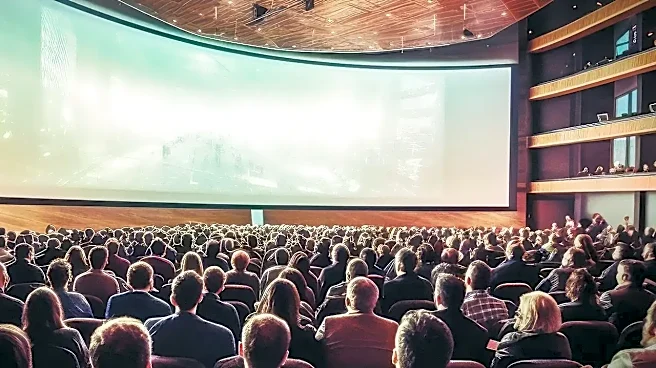
The 23rd Syracuse International Film Festival recently concluded, featuring a diverse selection of international and local films. The festival, which ran from Thursday to Sunday, held screenings at the Catherine Cummings Theatre in Cazenovia for the first
three days before moving to Syracuse’s Palace Theatre on its final day. Michelle DiBernardo, the festival's director, emphasized its role in expanding the cultural tastes of the Syracuse community by providing access to films that might otherwise be unavailable. The event included Q&A sessions with filmmakers, such as Christopher Mormando, and showcased films exploring various subjects, from mob dramas and Indigenous identity to the criminal justice system. With nearly 1,200 submissions across 25 categories, six judges curated the final selection, focusing on quality and message. Notable films included 'Seeds We Bury,' a documentary on Indigenous individuals and their ancestors, and 'Spheres' by German director Martin Gerigk, which won Best Experimental Short. The festival also honored industry professionals, with actor Arian Moayed receiving the Sophia Award for lifetime achievement and Mac Cushing of Salt City Grip earning the Lumen Award for contributions to the local entertainment industry. 'Complicated,' a documentary about Ehlers-Danlos syndrome patients, was recognized as Best Documentary Feature.
Why It's Important?
The Syracuse International Film Festival plays a crucial role in the cultural enrichment of the Syracuse community, offering a platform for global and local cinematic art that might otherwise be inaccessible in a city without major film studios. This initiative fosters a shared space for dialogue and diverse perspectives, contributing to the intellectual and artistic development of its residents. By showcasing films that explore complex social issues, different cultures, and unique storytelling, the festival broadens the community's understanding and appreciation of world cinema. The recognition of local professionals like Mac Cushing through awards such as the Lumen Award also highlights and supports the regional entertainment industry, encouraging local talent and infrastructure development. Furthermore, the festival's commitment to curating a wide range of films, including those with Indigenous themes and experimental approaches, ensures that diverse voices and innovative artistic expressions are given a platform, enriching the cultural landscape of Central New York and promoting a more inclusive artistic environment.
What's Next?
Following the successful conclusion of its 23rd edition, the Syracuse International Film Festival is already in the process of curating films for next year's event. Director Michelle DiBernardo has indicated that "big things are coming," suggesting continued growth and expansion for the festival. This ongoing curation process involves reviewing hundreds of submissions and selecting films based on their quality and message, ensuring a fresh and engaging lineup for future attendees. The festival's continued operation will likely further solidify its position as a significant cultural event in Syracuse, attracting more filmmakers and attendees. Future iterations are expected to continue fostering dialogue between filmmakers and cinema-goers, upholding its community-driven mission. The sustained effort to bring quality world cinema to Syracuse will likely lead to increased engagement from local residents and potentially draw more attention to the city's burgeoning film community, despite its smaller size compared to major film hubs.
Beyond the Headlines
The Syracuse International Film Festival's dedication to showcasing a wide array of films, particularly those that challenge perspectives and explore complex themes, has deeper implications for community engagement and cultural identity. By providing a space for films like 'Complicated,' which addresses Ehlers-Danlos syndrome, or 'Seeds We Bury,' which delves into Indigenous identity, the festival moves beyond mere entertainment to foster empathy and understanding of diverse human experiences. This commitment to thought-provoking cinema can stimulate critical thinking and encourage community conversations on important social issues. Moreover, the festival's emphasis on being a 'home' for quality world cinema, despite Syracuse's lack of major studios, highlights the power of local initiatives to create significant cultural impact. It demonstrates that access to global artistic expressions is not solely dependent on large metropolitan centers but can be cultivated through dedicated local efforts, thereby enriching the cultural fabric and intellectual curiosity of smaller communities.