





What's Happening?
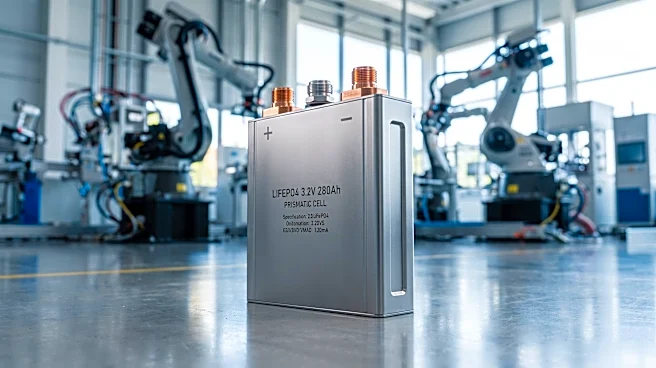
CATL, a prominent battery supplier, is actively pursuing overseas collaborations and technology licensing, emphasizing that partnerships should be evaluated based on their contributions to local markets. A key example of this strategy is CATL’s technology-licensing
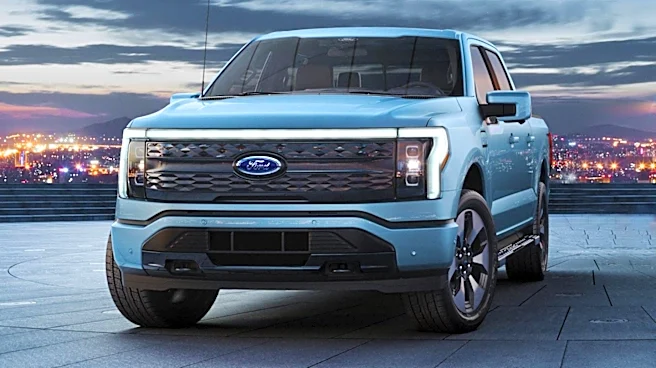
arrangement with Ford. According to CATL founder, chairman, and CEO Robin Zeng, this cooperation has largely met CATL’s expectations. The agreement enables Ford to produce batteries locally within the United States, specifically for American consumers. This initiative is part of CATL's broader vision for the future of electrification, which includes AI-driven materials research, standardized battery swapping, and low-carbon power systems. The company aims to make batteries a flexible component of an increasingly interconnected energy economy, extending its system-level logic beyond transport to renewable generation and electrified mobility.
Why It's Important?
This technology-licensing agreement between CATL and Ford holds significant importance for the U.S. automotive industry and its consumers. By enabling Ford to produce batteries domestically, it directly supports the growth of local manufacturing capabilities and reduces reliance on foreign battery imports. This move can enhance supply chain security for electric vehicles (EVs) in the U.S., a critical factor given global geopolitical and economic uncertainties. For American consumers, local production could lead to more readily available and potentially more affordable EVs, accelerating the transition to electric mobility. Furthermore, it fosters job creation within the U.S. manufacturing sector and contributes to the nation's economic independence in the burgeoning EV market. The partnership also signifies a pragmatic approach to industrial capability and cooperation, aligning with the broader goal of electrifying transportation and energy systems.
What's Next?
The success of the CATL-Ford technology-licensing arrangement is expected to influence future collaborations between international battery manufacturers and U.S. automakers. As Ford continues to scale up its local battery production, the market will likely see an increase in domestically produced EV components. This could encourage other foreign battery companies to consider similar licensing or joint venture models to tap into the U.S. market while adhering to local production requirements. The broader implications include a potential acceleration of EV adoption in the U.S. as battery supply becomes more localized and stable. Additionally, the focus on local production for American consumers could lead to policy discussions around incentives for domestic battery manufacturing and the development of a robust U.S. EV supply chain, further solidifying the nation's position in the global electric vehicle landscape.
Beyond the Headlines
The collaboration between CATL and Ford extends beyond mere battery production; it touches upon critical aspects of technological sovereignty and economic resilience for the United States. By licensing technology rather than solely importing finished products, the U.S. gains access to advanced battery manufacturing know-how, which can foster domestic innovation and expertise in this crucial sector. This approach could mitigate risks associated with over-reliance on single-source supply chains and enhance national security by localizing key components of future transportation and energy infrastructure. Furthermore, it highlights a strategic shift towards building a self-sufficient clean energy economy, potentially influencing educational and workforce development programs to train a skilled labor force capable of supporting advanced battery manufacturing and related technologies. The ethical dimension involves ensuring fair labor practices and environmental sustainability in the newly established domestic production facilities.