







What's Happening?
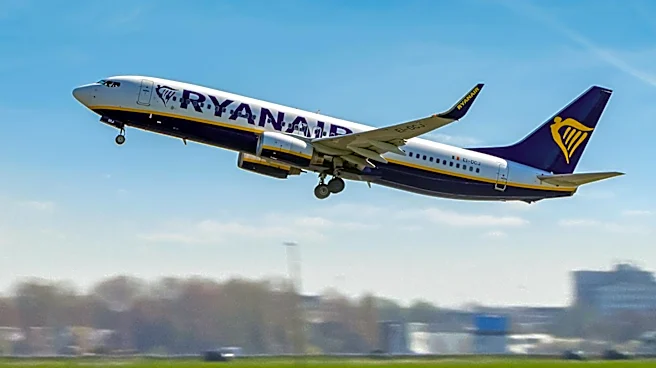
Ryanair and Wizz Air, major European low-cost carriers, have issued warnings that airfares could become significantly more expensive if oil and jet fuel prices remain high. Both airlines indicate that sustained cost pressures will eventually be passed
on to passengers. Ryanair has already reduced its passenger target for the financial year ending March 31, 2027, from 216 million to 214 million, partly to mitigate exposure to expensive unhedged fuel during the typically loss-making winter season. The airline anticipates that if high oil prices persist into summer 2027, short-haul airfares in Europe could increase materially. Wizz Air also acknowledged that prolonged high fuel prices would pressure the European aviation sector, especially as existing fuel hedges expire, potentially leading to capacity cuts before ticket price increases.
Why It's Important?
This situation is critical for the aviation industry and consumers globally, including those in the U.S., where airline fares were already 25.5% higher in July than the previous year. Fuel is one of the largest operating expenses for airlines, and sustained increases cannot be absorbed indefinitely. While fuel hedging provides short-term protection, these contracts eventually expire, forcing airlines to purchase fuel at prevailing market rates. The warnings from Ryanair and Wizz Air suggest a potential shift in pricing strategies across the industry. If airlines respond to high fuel costs by reducing capacity—operating fewer flights or abandoning less profitable routes—the decrease in available seats, coupled with strong passenger demand, could drive fares up even without direct fuel surcharges. This could lead to fewer flight options and higher travel costs for consumers.
What's Next?
Airlines are expected to first respond to persistently high fuel prices by reducing capacity, particularly on less profitable routes or during off-peak seasons. Pricing measures, such as increased ticket fares, could follow depending on the evolution of supply and demand. The real test for airlines will come as their existing fuel hedging contracts expire, forcing them to buy a larger portion of their fuel at current market prices. Passengers should anticipate potential increases in airfares and possibly fewer flight options, especially if Brent crude prices remain at or above $90-$100 a barrel. Industry analysts will closely monitor how airlines manage their fuel costs and adjust their capacity and pricing strategies in the coming months.
Beyond the Headlines
The warnings from Ryanair and Wizz Air highlight the aviation industry's inherent vulnerability to global energy markets. This situation could accelerate the consolidation of airlines, as smaller carriers with less extensive fuel hedging might struggle to survive prolonged periods of high fuel costs. It also underscores the delicate balance airlines must maintain between managing operational expenses and remaining competitive. For consumers, this could mean a long-term shift towards higher travel costs, potentially impacting leisure travel patterns and business travel budgets. Furthermore, it may spur greater investment in fuel-efficient aircraft and alternative fuels, although these are long-term solutions. The immediate future points to a more expensive and potentially less flexible air travel landscape.