

What's Happening?
Jennifer Aniston's trainer, Dani Coleman, has detailed a 30-minute strength training workout routine that Aniston follows. The full-body routine incorporates moderate and heavy weights, along with specialized equipment such as ankle weights, a glider,
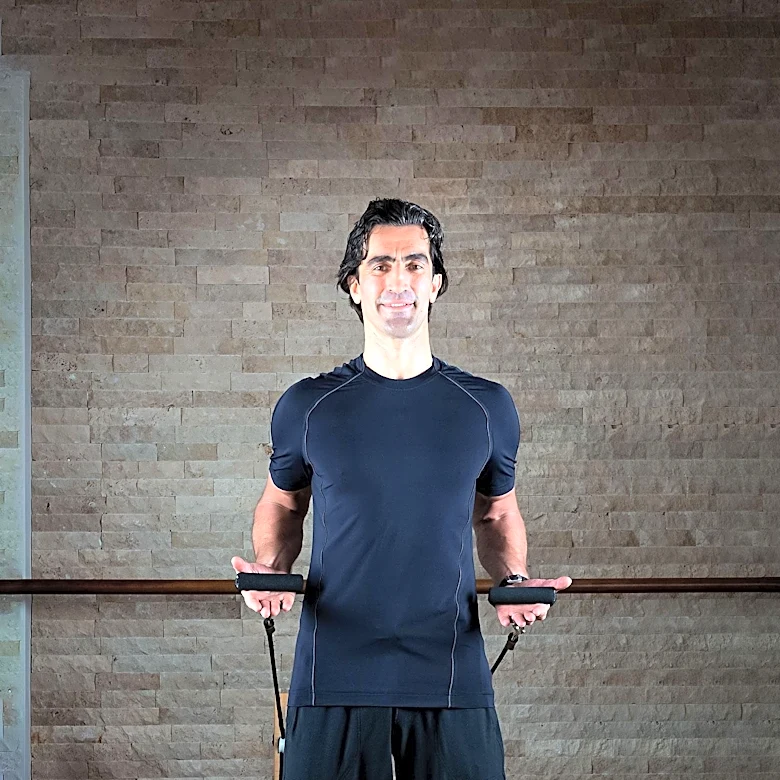
and a P.ball, which is a small exercise ball with an attached resistance band and straps. The workout emphasizes compound movements, engaging multiple muscle groups simultaneously, and targets 'little tiny micro muscles that are hiding underneath big muscles,' according to Aniston. The routine includes exercises like staggered stance to stand with a glider, single-arm row in a bird dog, bicep curls in an open step, tricep skull crushers with toe taps, chest presses, and an ab burnout. The workout is characterized by slow, controlled movements that significantly elevate the heart rate.
Why It's Important?
This detailed insight into Jennifer Aniston's workout routine is important for several reasons. Firstly, it provides a transparent look into the fitness regimen of a prominent public figure, which can inspire and guide individuals seeking effective strength training methods. The emphasis on compound movements and specialized equipment highlights contemporary fitness trends that prioritize functional strength and engagement of often-neglected muscle groups. Secondly, the description of the workout as challenging, even for experienced individuals, underscores the intensity and effectiveness of Aniston's approach, potentially motivating others to push their fitness boundaries. Lastly, the mention of the P.ball and glider introduces specific tools that can enhance home workouts, making advanced training techniques more accessible to a broader audience. This information can influence fitness enthusiasts and professionals alike, promoting a more holistic and challenging approach to physical well-being.
Beyond the Headlines
The revelation of Jennifer Aniston's workout routine extends beyond mere celebrity fitness, touching upon broader trends in the health and wellness industry. The focus on low-impact, high-intensity strength training with specialized equipment reflects a shift towards more nuanced and targeted exercise methodologies. This approach contrasts with traditional, often high-impact, routines and caters to a demographic increasingly interested in sustainable and injury-preventative fitness. The workout's design, engaging 'micro muscles,' suggests an understanding of biomechanics and a desire for comprehensive physical conditioning, which is a growing demand in the wellness market. Furthermore, the accessibility of such routines through at-home streaming workouts, as mentioned in the source, signifies the ongoing democratization of fitness, allowing individuals to access celebrity-level training without needing a personal trainer or gym membership. This trend empowers more people to take control of their physical health with expert-designed programs.