





What's Happening?
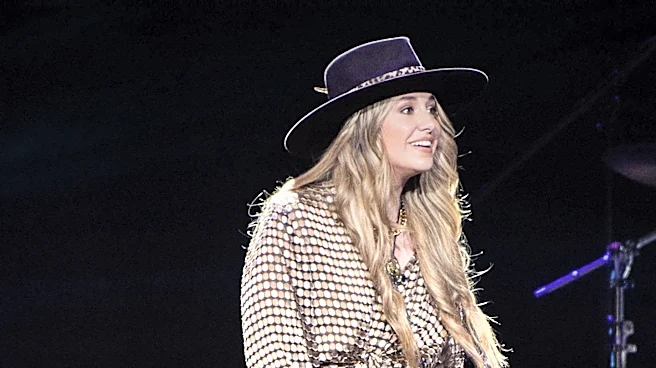
Country singer Ella Langley recently turned down a date proposal from TikTok influencer Tiki (@tikibeen1), who boasts over 475,000 followers. The influencer approached Langley in a parking garage, asking, "Ella, how many likes to take you on a date?"
Langley's response was a direct, "Not enough in the world." Tiki, undeterred, later posted additional videos about the interaction, even after Langley commented on her own delivery, stating it was "dark humor" and that it "takes more than likes on TikTok. I'm still a human." Reports from TMZ and People suggest Langley is in a relationship with fellow country singer Tucker Wetmore, though neither has publicly confirmed it. They were recently seen together leaving an event in Nashville.
Why It's Important?
This incident highlights the evolving dynamics between traditional celebrities and social media influencers, particularly in the context of public interaction and personal boundaries. For influencers, the pursuit of viral content and engagement can sometimes blur the lines of appropriate behavior, as seen in Tiki's persistent attempts despite clear rejection. For artists like Ella Langley, maintaining a sense of privacy and authenticity in an era dominated by digital interactions becomes a challenge. The public nature of the exchange, amplified by social media, also sparks discussions about online etiquette and the perceived value of 'likes' and follower counts in real-world interactions. It underscores the pressure on public figures to navigate both their professional and personal lives under constant digital scrutiny.
What's Next?
The interaction is likely to continue generating discussion on social media platforms, with fans and observers debating the influencer's approach and Langley's response. This event could serve as a case study for other public figures and influencers regarding the boundaries of online engagement and personal space. For Ella Langley, it may reinforce her stance on privacy and the distinction between her public persona and private life. For Tiki, the incident, while a rejection, has already generated significant online content and engagement, which is often a primary goal for influencers. The ongoing speculation about Langley's relationship with Tucker Wetmore may also intensify as a result of this public interaction.
Beyond the Headlines
This exchange delves into the broader cultural implications of the 'influencer economy' and the commodification of personal interactions. The influencer's question, framed around 'likes,' reflects a digital metric being applied to a personal request, highlighting how online validation can seep into real-world expectations. Langley's response, emphasizing her humanity over digital metrics, subtly critiques this trend. It also touches upon the ethical considerations of content creation, where personal encounters can be leveraged for public consumption without explicit consent. The incident underscores the growing tension between the curated, often performative, world of social media and the desire for genuine, private interactions, raising questions about the long-term impact of constant digital performance on individual well-being and societal norms.