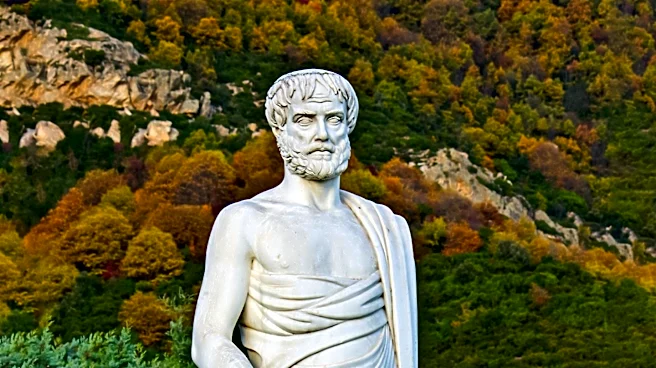




What's Happening?
A recent analysis highlights the profound impact of Homer and Aristotle on Greek civilization and their lasting influence on Western culture. Homer, revered as a polymath, is credited with sparking Greek civilization through his epic poems, which encapsulate
wisdom and insights into various aspects of life, including war, peace, and the natural world. Aristotle, a prominent philosopher, regarded Homer as a fountain of knowledge, often referencing his works in philosophical and scientific treatises. The analysis underscores how Homer's epics served as a historical record and a source of inspiration for Greek society, influencing subsequent generations of thinkers and artists.
Why It's Important?
The enduring legacy of Homer and Aristotle is significant as it underscores the foundational role they played in shaping Western thought and culture. Homer's epics not only provided a historical account of Greek society but also offered a rich tapestry of themes that continue to resonate in modern literature and philosophy. Aristotle's engagement with Homer's work highlights the interconnectedness of literature and science in ancient Greek thought, a relationship that has influenced educational and intellectual traditions in the West. Understanding this legacy is crucial for appreciating the roots of Western civilization and the development of its cultural and intellectual heritage.
Beyond the Headlines
The exploration of Homer and Aristotle's influence also raises questions about the transmission of knowledge and cultural values across generations. The way these ancient texts have been interpreted and valued over time reflects broader cultural and intellectual shifts. Additionally, the analysis invites reflection on the role of storytelling and myth in shaping societal norms and values, as well as the ways in which ancient wisdom can inform contemporary discussions on ethics, governance, and human nature. The continued study of these figures highlights the timeless nature of their contributions and the ongoing relevance of classical education in a modern context.