




What's Happening?
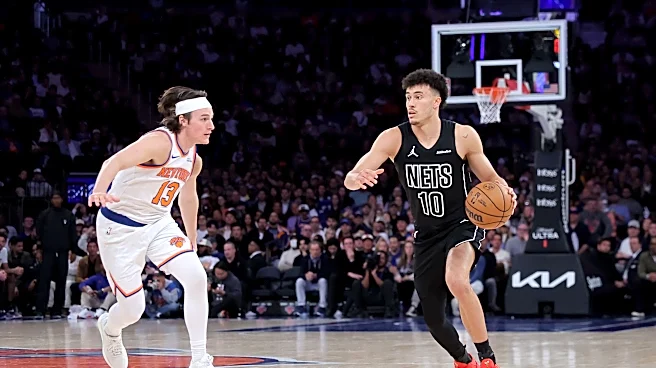
Joe Tsai, owner of the Brooklyn Nets, and his investment partner Ollie Weisberg, vice chair of Brooklyn Sports & Entertainment, have articulated their strategic vision for sports franchises as a valuable asset class. Weisberg highlighted their initial
investment in the Nets in 2017, driven by the limited supply of NBA teams and the expanding market for live sports. They anticipated growth in media rights, shifting from cable to over-the-top (OTT) streaming, and recognized Brooklyn as a rapidly developing part of New York City. Their approach involves leveraging their business-building expertise to enhance both on-court performance and off-court business operations. This strategy has seen the value of the Nets more than double from $3.3 billion in 2019 to an estimated $7.4 billion this year, according to Sportico. The Liberty, the WNBA team also owned by Tsai, has similarly seen its value soar to over $600 million from a reported $14 million purchase price from James Dolan in 2019.
Why It's Important?
This perspective from Joe Tsai and Ollie Weisberg underscores a significant shift in how professional sports franchises are viewed within the U.S. business landscape. Their emphasis on sports as a 'phenomenal financial investment' and a 'fixed supply' asset class highlights a growing trend among investors to acquire and develop sports teams not just for passion, but for substantial financial returns. The doubling of the Nets' value and the dramatic increase in the Liberty's valuation demonstrate the lucrative potential of this investment strategy. This approach impacts the broader sports industry by driving up franchise valuations, attracting more institutional investors, and fostering increased competition for team ownership. It also influences how teams are managed, with a greater focus on fan experience, venue improvements, and technological integration to maximize revenue and asset appreciation. This business model suggests that sports teams are increasingly seen as diversified assets within larger investment portfolios.
What's Next?
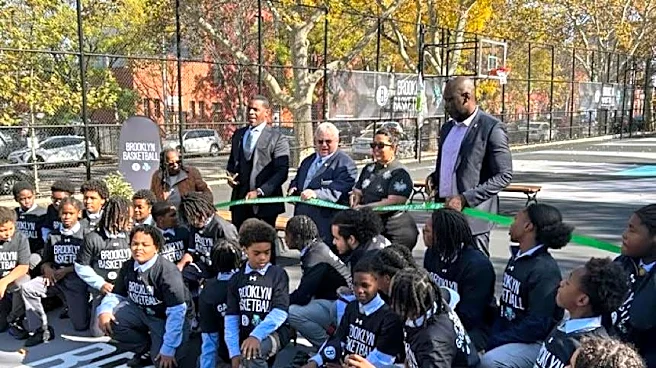
The strategy outlined by Tsai and Weisberg indicates a continued focus on long-term growth and value creation for their sports assets. This includes ongoing investments in infrastructure, such as the over $150 million in renovations planned for the Nets and Barclays Center, and technological partnerships, like the one with Alibaba. They also plan to expand community engagement through programs like Brooklyn Basketball to build a loyal fan base over decades. The sale of a minority stake in Brooklyn Sports & Entertainment to Julia Koch and her family in 2024 suggests a willingness to bring in outside investors to further capitalize and expand their ventures. This model could influence other sports owners to adopt similar long-term, asset-focused strategies, potentially leading to further consolidation and increased investment in the U.S. sports market. The rivalry with the Knicks, as noted by Weisberg, will also continue to fuel competition and innovation in the New York sports scene.
Beyond the Headlines
The narrative presented by Tsai and Weisberg extends beyond simple team ownership, illustrating a sophisticated financial strategy that views sports franchises as integral components of a diversified investment portfolio. Their background in finance and technology, particularly Tsai's connection to Alibaba, suggests a future where sports ownership is deeply intertwined with global capital markets and digital innovation. The concept of 'fixed supply' assets in the NBA, combined with the growing global appeal of basketball, positions these franchises as highly desirable and appreciating investments. This also raises questions about the evolving relationship between sports, entertainment, and technology, as owners seek to create immersive fan experiences and leverage digital platforms for revenue generation. The long-term commitment to building a fan base and community connection also highlights a dual objective: financial gain coupled with social impact, which could become a benchmark for future sports investments.