







What's Happening?
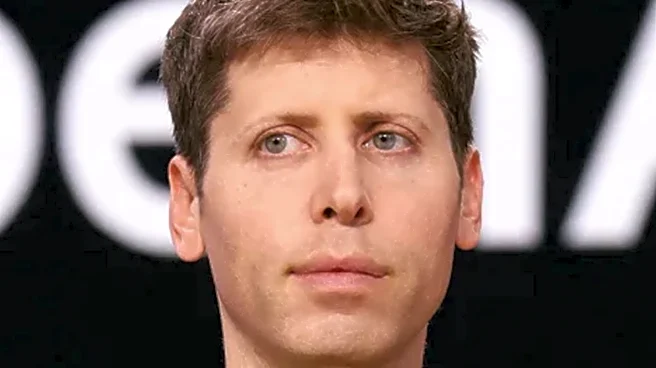
Sam Altman, CEO of OpenAI, believes that artificial intelligence is poised to usher in an unprecedented era for entrepreneurs, potentially triggering the 'biggest small-business boom ever.' Altman stated that AI has drastically reduced the time, cost,
and expertise required to transform an idea into a working product, test it, and gather customer feedback. He cited an example of a laundromat operator who successfully used ChatGPT for marketing, legal advice, and vendor management. Altman, who previously led Y Combinator, emphasized that AI can remove significant barriers to starting businesses, such as limited capital, specialized knowledge, scientific research, and complex supply chains. He also noted that while AI will transform large companies and governments, its potential to grant individuals greater independence is particularly significant.
Why It's Important?
This prediction is highly significant for the U.S. economy and society, as a boom in small businesses could lead to widespread job creation, increased economic resilience, and greater innovation. Small businesses are often considered the backbone of the American economy, and AI's ability to lower entry barriers could democratize entrepreneurship, allowing more individuals to pursue their ideas. This could lead to a more dynamic and competitive market, fostering new industries and services. Furthermore, by enabling individuals to build independent businesses, AI could counteract trends of corporate consolidation and provide more diverse career paths. The potential for AI to empower small teams to achieve what once took months in minutes could fundamentally reshape the entrepreneurial landscape, making it more accessible and efficient for a broader range of people.
What's Next?
To fully realize this predicted small-business boom, several developments are likely. AI companies will continue to refine and develop tools specifically tailored for entrepreneurial needs, focusing on ease of use and practical applications. There will likely be an increased demand for educational programs and resources to teach aspiring entrepreneurs how to effectively leverage AI in their ventures. Policy discussions may also emerge regarding how to support and regulate this new wave of AI-powered small businesses, ensuring fair competition and access to resources. Additionally, as more individuals start businesses with AI, there could be a shift in the labor market, with a greater emphasis on creativity, problem-solving, and the ability to integrate AI tools, rather than traditional specialized skills.
Beyond the Headlines
The vision of an AI-driven small-business boom carries profound societal implications. It suggests a potential shift towards a more decentralized economic model, where individual ingenuity is amplified by technology, reducing reliance on large corporate structures. This could lead to greater economic self-sufficiency and a more diverse entrepreneurial class. However, it also raises questions about equitable access to AI tools and the potential for a new form of digital divide, where those without the necessary skills or resources to utilize AI effectively might be left behind. The ethical considerations of AI in business, such as data privacy, algorithmic bias, and the nature of work, will also become increasingly important as more small businesses integrate these technologies. Ultimately, the success of this boom will depend not only on technological advancements but also on societal adaptations and policies that ensure broad-based participation and benefit.