







What's Happening?
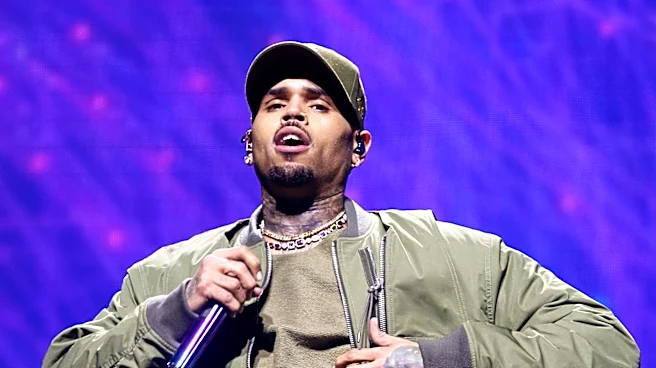
During a recent performance of his song "Take You Down," Chris Brown declined a fan's offer to have his wife join him onstage. The incident occurred when a fan in the audience suggested Brown engage with his wife during the risqué segment of the show.
Brown, known for his boundary-pushing stage performances, explicitly refused the request, stating, "I ain't gonna do that" and "hell nah." This marks a rare instance where Brown has drawn a line regarding fan interaction during his performances, specifically citing the woman's marital status as the reason for his refusal. His performances of "Take You Down" often involve steamy interactions with female fans, which have previously garnered significant media attention.
Why It's Important?
This event is important as it highlights a moment of unexpected restraint from an artist often associated with controversial public behavior and provocative stage shows. Chris Brown's decision to decline the fan's offer, despite the suggestive nature of his performance, could be interpreted in various ways. It might signal a conscious effort to avoid certain types of controversy, particularly those involving married individuals, or it could simply reflect a personal boundary he maintains. For his audience and the broader entertainment industry, it provides a nuanced perspective on an artist whose public image is frequently scrutinized. The incident also underscores the dynamic and sometimes unpredictable nature of live performances and fan engagement in the music industry.
What's Next?
While this specific incident is unlikely to lead to major immediate consequences, it may influence how Chris Brown's future performances are perceived and discussed. Fans and critics might pay closer attention to the boundaries he sets or crosses during his shows. The event could also spark further discussions within the entertainment industry about the ethics of fan interaction during performances, especially when they involve suggestive or intimate acts. For Brown, maintaining a degree of unpredictability in his shows while also demonstrating moments of unexpected discretion could contribute to ongoing public interest and debate surrounding his artistry and personal conduct.
Beyond the Headlines
Beyond the immediate news, this incident touches upon broader themes of consent, public persona, and the evolving landscape of celebrity interaction. In an era where artists' actions are constantly scrutinized, Brown's refusal, even in a seemingly lighthearted context, can be seen as a subtle commentary on personal boundaries. It also raises questions about the expectations placed on performers and the extent to which they are expected to fulfill audience fantasies. The event could contribute to a larger conversation about the responsibilities of artists in managing their public image and the impact of their actions on their audience, particularly in highly charged performance environments.