
What's Happening?
Scout Motors, a U.S.-based electric truck and SUV manufacturer, has reaffirmed its commitment to establishing seven retail locations in Canada by 2033. This plan persists despite the 25% tariff imposed
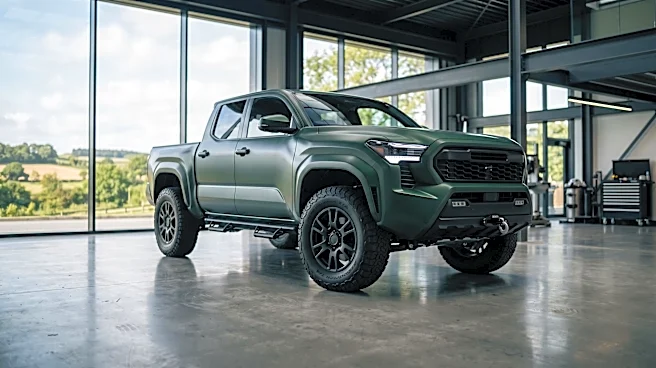
by Canada on U.S.-built vehicles, which took effect in April 2025. The company intends to open three 'workshops' in Toronto, two in Montreal, and one each in Vancouver and Ottawa. These locations will be company-owned and operated, integrating both sales and servicing. While the Canadian network completion is now projected for 2033, a year later than initially planned, Scout has also reduced its overall North American retail target from 100 to 90 locations, with all 10 cuts occurring in the U.S. Scout's Traveler SUV and Terra pickup are slated for production in South Carolina starting in 2028. The company is also exploring the use of Canadian-made batteries from Volkswagen's PowerCo plant in St. Thomas, Ontario, beginning in 2029, which could potentially mitigate tariff impacts.
Why It's Important?
This decision by Scout Motors highlights the complexities and strategic adjustments companies make in response to international trade policies. The Canadian tariffs, enacted in retaliation to U.S. duties on Canadian-built vehicles, create a significant financial hurdle for automakers without local production facilities, such as Volkswagen Group, Scout's parent company. Scout's continued investment in the Canadian market, despite these tariffs, indicates a long-term strategic view of the market's potential for electric vehicles. The potential use of Canadian-made batteries from Volkswagen's upcoming Ontario plant could offer a pathway to reduce tariff exposure, demonstrating how supply chain localization can become a critical factor in international market access and pricing strategies. This situation also underscores the ongoing trade discussions between the U.S. and Canada, where automotive duties remain a point of contention, influencing investment decisions and consumer costs in both nations.
What's Next?
Scout Motors plans to begin commercial production of its Traveler SUV and Terra pickup in South Carolina in 2028, with the Canadian retail network expected to be fully operational by 2033. The company has not yet announced specific Canadian pricing or a sales launch date, though refundable reservations are currently being accepted. A key factor that could alter Scout's market entry strategy is the outcome of ongoing trade negotiations between the U.S. and Canada. Should a trade agreement eliminate Canada's retaliatory tariffs, a major obstacle to Scout's Canadian launch would be removed, potentially impacting pricing and market penetration. Furthermore, the integration of Canadian-made batteries from Volkswagen's PowerCo plant, scheduled to begin operations in 2029, could influence the final cost structure and competitiveness of Scout vehicles in the Canadian market.
Beyond the Headlines
Scout Motors' commitment to the Canadian market, despite tariff challenges, reflects a broader trend in the automotive industry towards electrification and the strategic importance of North American market share. The company's decision to own and operate its retail 'workshops' rather than relying on independent dealerships signifies a direct-to-consumer model, which could offer greater control over brand experience and customer service. This approach also bypasses traditional dealership franchise laws, a growing trend among EV manufacturers. The evolving product strategy, including an extended-range electric option that accounts for 85% of customer preorders, indicates a pragmatic response to consumer demand for greater range and flexibility in electric vehicles. This highlights the ongoing innovation and adaptation within the EV sector to meet diverse customer needs and overcome perceived limitations of pure electric powertrains.