





What's Happening?
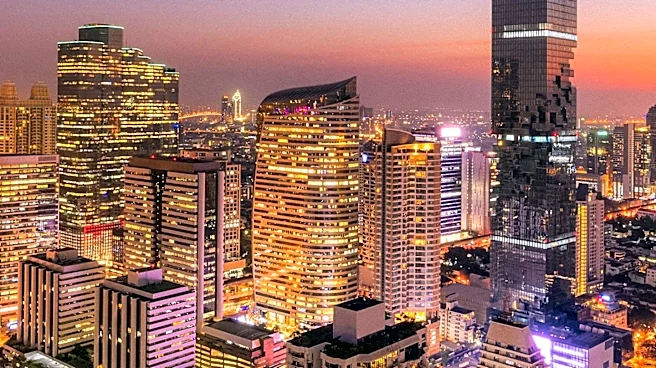
Mohamed Alabbar, the founder of UAE-based Emaar Properties and Eagle Hills, has announced plans for a significant mixed-use development in Bangkok, Thailand. The project, estimated to be worth around USD 5 billion (THB 160 billion to THB 170 billion),
includes a landmark tower that could potentially become the world's tallest building. Alabbar, known for developing the Burj Khalifa and The Dubai Mall, revealed these plans during a recent visit to Thailand. His company has been studying investment opportunities in Bangkok for four years and has spent approximately 18 months negotiating the current deal, with an agreement expected to be finalized within the next one to two weeks. Eagle Hills will initially lead the project, with Emaar potentially joining later for the retail and hotel components. The development will span roughly 32,000 to 48,000 square meters of leased land in Bangkok and will feature residences, retail spaces, offices, and hotels. The exact location has not yet been disclosed.
Why It's Important?
This ambitious project signifies a major foreign direct investment into Thailand, potentially boosting its economy and property sector, which has recently faced slower growth. The development of a new world's tallest tower could significantly enhance Bangkok's global profile as a business and tourism destination, attracting further investment and visitors. For Eagle Hills, this marks its first investment in Southeast Asia, indicating a strategic expansion into new markets. The project's long-term development horizon of 10 to 15 years suggests a commitment to the region despite current economic conditions. The emphasis on incorporating Thai identity into the design and involving Thai architects could also foster local talent and cultural representation in a global landmark. The potential use of alternative construction technology for super-tall buildings could also drive innovation in the construction industry.
What's Next?
The immediate next step involves finalizing the agreement for the USD 5 billion development within the coming weeks. Following this, the first year will be dedicated to detailed design and obtaining necessary permits. Construction is anticipated to commence approximately 18 months into the process, with the overall development expected to take three to five years to complete. Alabbar has expressed his desire to build the world's tallest tower, contingent on regulatory approvals and government permissions. He also plans to explore acquiring or leasing coastal land in Thailand for a large-scale resort, considering sites between 4.8 million to 6.4 million square meters. Additionally, Eagle Hills is open to redeveloping the Khlong Toei Port area if the Thai government opens it to private investors, indicating further potential investments in the country.
Beyond the Headlines
The proposed development extends beyond a mere construction project; it represents a significant vote of confidence in Thailand's long-term economic potential and its appeal as a global hub. The decision to invest heavily in Bangkok, despite recent economic slowdowns and a decline in foreign tourist arrivals, highlights a strategic focus on long-term growth rather than short-term market fluctuations. The project's scale and ambition could trigger a ripple effect, encouraging other international developers and investors to consider large-scale ventures in Thailand and the broader Southeast Asian region. Furthermore, the potential for a new world's tallest tower could reignite global competition in skyscraper development, pushing architectural and engineering boundaries. The emphasis on local identity in design also underscores a growing trend in global development to integrate local culture into iconic structures, fostering a sense of ownership and pride within the host nation.