






What's Happening?
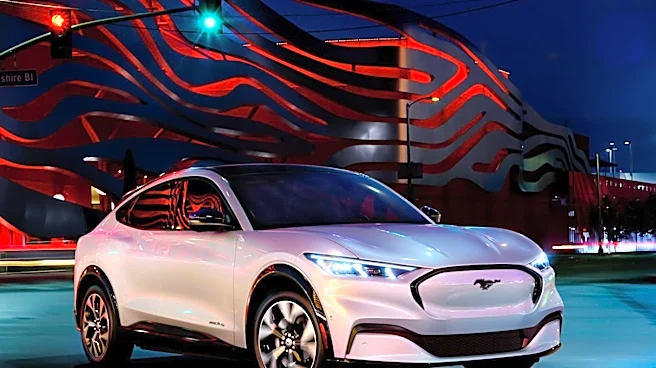
Ford Motor Company has rehired 350 veteran engineers, often referred to as 'gray beards', after discovering that its AI-powered quality-control systems were unable to match the experience and judgment of seasoned employees. The automaker found that while
AI was a valuable tool, it was not sufficient on its own to consistently deliver the quality expected. Charles Poon, Ford's vice president of vehicle hardware engineering, emphasized the importance of training AI systems with the expertise of experienced individuals. This move comes despite Ford's recent enthusiasm for AI, including the deployment of AI-powered cameras across its manufacturing plants to detect quality issues. The veteran engineers are now assisting in training Ford's AI systems and passing on their institutional knowledge to the next generation of workers.
Why It's Important?
Ford's decision to rehire experienced engineers highlights the limitations of AI in replacing human expertise, particularly in quality control. This development underscores the ongoing debate about the role of AI in the workforce and its potential to replace human jobs. While AI can enhance productivity and efficiency, Ford's experience suggests that human judgment and experience remain crucial, especially in complex tasks. This decision may influence other industries to reconsider the balance between AI and human labor, potentially impacting employment trends and the future of work. It also serves as a reminder to investors and businesses that while AI is a powerful tool, it should complement rather than replace human expertise.
What's Next?
Ford's approach of integrating AI with human expertise may set a precedent for other companies facing similar challenges. As AI technology continues to evolve, businesses will need to find ways to effectively combine it with human skills to maximize productivity and quality. This could lead to increased investment in training programs that focus on enhancing AI systems with human insights. Additionally, the automotive industry and other sectors may closely monitor Ford's outcomes to assess the long-term viability of such a hybrid approach. The broader implications for workforce development and employment policies could also emerge as companies navigate the integration of AI into their operations.