
What's Happening?
The beloved musical 'The Fantasticks' has premiered on Broadway with its first-ever run, featuring a significant gay reimagining of its central love story. The production now portrays the courtship of Matt
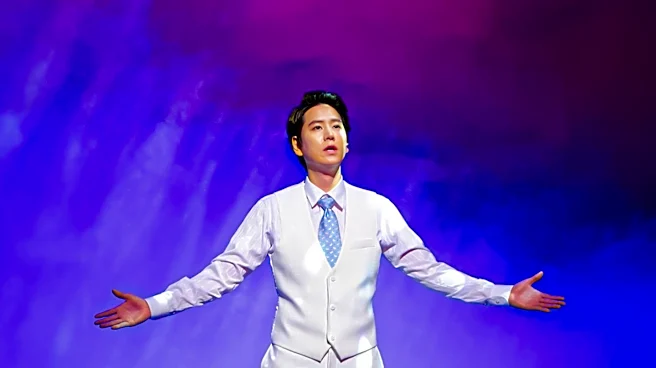
(Maxim Chlumecky) and Lewis (Nathan Levy), two young men, instead of the original Matt and Luisa. Additionally, the meddling parents, originally fathers, have been switched to mothers: flower gardener Mildred (Leslie Rodriguez Kritzer) and avid vegetable grower Bessie (Ruthie Ann Miles). Directed and choreographed by Christopher Gattelli, the production largely retains the musical's original tones and themes from its 1960 premiere, while incorporating these modern tweaks. The show continues to feature its classic songs, such as 'Try to Remember' and 'They Were You,' and maintains its whimsical, poetic language. Zane Phillips plays the narrator/trickster magician El Gallo, bringing a different dynamic to his interactions with the male leads.
Why It's Important?
This Broadway revival of 'The Fantasticks' is significant for its progressive reimagining of a classic musical, reflecting evolving societal norms and expanding representation in theater. By centering a gay couple and gender-swapping parental roles, the production makes a long-running show more relevant to contemporary audiences, potentially attracting new viewers who connect with these modern interpretations. This move also signals a broader trend in the entertainment industry towards inclusivity and diversity in storytelling. For longtime fans, it offers a fresh perspective on a cherished work, while for new audiences, it provides an accessible entry point into a piece of theatrical history. The success of such a reimagining could encourage further adaptations of classic works to better reflect modern sensibilities and diverse experiences, impacting future theatrical productions and their appeal.
What's Next?
The Broadway run of 'The Fantasticks' will continue to play to audiences, and its reception will be closely watched by the theater community. The success of this reimagined production could influence future decisions regarding the adaptation of other classic musicals and plays, potentially leading to more diverse casting and narrative interpretations. Critical and audience feedback will be crucial in determining its long-term impact. If the production proves popular, it may inspire other creators to explore similar updates to traditional works, further pushing the boundaries of representation on stage. The show's run will also contribute to ongoing discussions within the arts about how to balance preserving the integrity of original works with making them relevant and inclusive for contemporary audiences.
Beyond the Headlines
Beyond its immediate theatrical impact, this production of 'The Fantasticks' touches upon deeper cultural and ethical considerations regarding artistic adaptation. It raises questions about the extent to which classic works can and should be altered to reflect modern values without losing their original essence. The decision to change the gender and sexual orientation of key characters sparks dialogue about the ownership of narratives and the role of art in social commentary. This reimagining also highlights the enduring power of storytelling to evolve and resonate across different eras and demographics. It underscores the idea that love stories, regardless of the specific identities of the characters, can convey universal themes of connection, challenge, and growth, making the musical accessible to a wider spectrum of human experience. This adaptation contributes to the ongoing cultural conversation about representation and the dynamic nature of artistic interpretation.