







What's Happening?
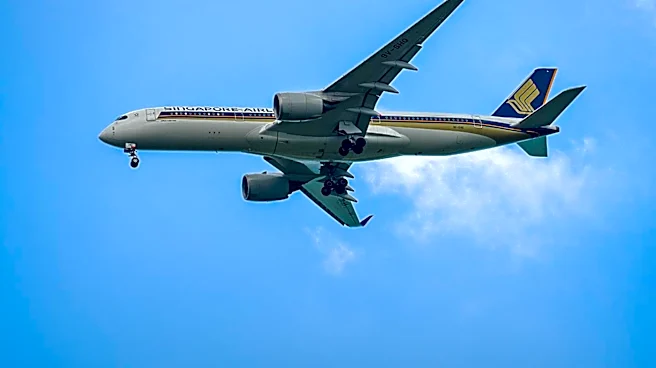
Singapore Airlines' premium economy class on its Boeing 777 aircraft provides an elevated travel experience with spacious seating, advanced entertainment options, and attentive service. The cabin features 28 seats in a 2-4-2 configuration, offering 38
inches of pitch and 19.5 inches of width, significantly more than standard economy seats. Passengers benefit from an 8-inch seat recline and a legrest, with bulkhead seats including an attached pop-out footrest. Each seat is equipped with a 13.3-inch entertainment screen, offering a wide selection of movies and TV shows, along with noise-canceling headphones. Power ports and USB-A ports are readily available for charging devices. While lounge access is not included, premium economy passengers receive priority check-in and boarding. The airline also offers its 'Book the Cook' service for pre-ordered meals, providing a more personalized dining experience, and free unlimited Wi-Fi for KrisFlyer members linked to their reservation. The service aims to bridge the gap between economy and business class, offering a more comfortable long-haul journey.
Why It's Important?
This enhanced premium economy offering from Singapore Airlines is important for the U.S. travel industry and consumers as it sets a higher standard for comfort and amenities in an intermediate cabin class. For U.S. travelers flying long-haul international routes, particularly to and from Asia, this provides a more accessible option for increased comfort without the full cost of business class. The availability of features like significant seat recline, extensive in-flight entertainment, and free Wi-Fi for loyalty members can influence booking decisions and increase passenger satisfaction. This trend towards more robust premium economy offerings by major international carriers like Singapore Airlines could pressure U.S. airlines to upgrade their own premium economy products to remain competitive, especially on routes where these airlines directly compete. It also highlights a growing market segment for travelers seeking better value and comfort than economy, but who are not willing or able to pay for business class, potentially shifting revenue streams within the airline industry.
What's Next?
The continued evolution of premium economy offerings by airlines like Singapore Airlines suggests a future where this cabin class becomes increasingly sophisticated, potentially incorporating more amenities traditionally found in business class. Other airlines, including U.S. carriers, may respond by investing further in their premium economy products to match or exceed these standards, leading to a more competitive landscape. Travelers can expect to see more personalized services, improved dining options, and advanced in-flight technology becoming standard in this segment. The pricing strategies for premium economy, especially regarding mileage redemption, will likely continue to be dynamic, with airlines adjusting based on demand and competition. This could lead to more strategic decisions for consumers on when and how to redeem loyalty points for optimal value. Furthermore, the success of these enhanced offerings may encourage airlines to explore new hybrid cabin classes or further differentiate their existing ones to cater to diverse passenger needs and preferences.
Beyond the Headlines
The rise of sophisticated premium economy cabins like Singapore Airlines' reflects a broader shift in consumer expectations and airline strategies. It signifies a recognition that a significant portion of travelers are willing to pay a premium for comfort and convenience beyond basic economy, but below the luxury of business or first class. This trend could lead to a re-evaluation of the traditional three-tier cabin structure, potentially creating more nuanced options for passengers. Ethically, it raises questions about accessibility and equity in air travel, as enhanced comfort becomes more attainable for a wider range of budgets, yet still out of reach for the most budget-conscious travelers. Environmentally, as more passengers opt for slightly larger seats and more amenities, the overall carbon footprint per passenger could subtly increase, prompting airlines to balance comfort with sustainability initiatives. Culturally, the emphasis on personalized service and advanced entertainment reflects a globalized travel culture where individual experience and digital connectivity are highly valued, influencing how airlines design their services and engage with customers.