
What's Happening?
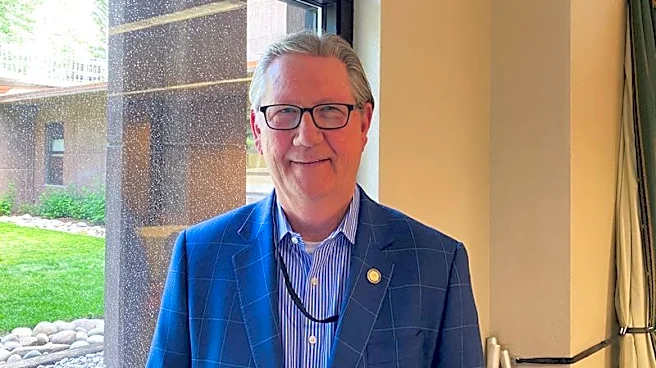
Mary Daly, President of the Federal Reserve Bank of San Francisco, expressed her support for the Federal Reserve's recent decision to hold interest rates steady, despite ongoing inflation concerns. Speaking at an economics conference in Tokyo, Daly emphasized
the need for more data before making further rate decisions. The Federal Open Market Committee (FOMC) recently voted to maintain the federal funds rate in the 3.5% to 3.75% range, with three officials dissenting in favor of a rate hike. Daly highlighted the importance of understanding whether current inflation is driven by temporary supply shocks or a more persistent trend. She stressed the need for vigilance and readiness to act if inflation momentum builds.
Why It's Important?
The Federal Reserve's approach to interest rates is pivotal in managing inflation and ensuring economic stability. Daly's support for holding rates steady reflects a cautious approach, allowing time to assess the inflationary landscape. This decision impacts financial markets, consumer confidence, and business planning. If inflation proves to be more persistent, the Fed may need to take aggressive action, which could affect borrowing costs and economic growth. Daly's comments underscore the complexity of the current economic environment, where supply chain disruptions and geopolitical tensions add layers of uncertainty. The Fed's ability to navigate these challenges will be crucial in maintaining economic stability.
What's Next?
The Federal Reserve will continue to gather data and assess economic conditions ahead of its September policy meeting. The central bank's decision-making will focus on whether inflationary pressures are temporary or indicative of a longer-term trend. Market participants will be watching for any shifts in the Fed's stance, particularly in response to new economic data. The outcome of the Fed's deliberations will have significant implications for interest rates, inflation, and overall economic health. As the Fed remains vigilant, its actions will be closely scrutinized by investors, businesses, and policymakers.