







What's Happening?
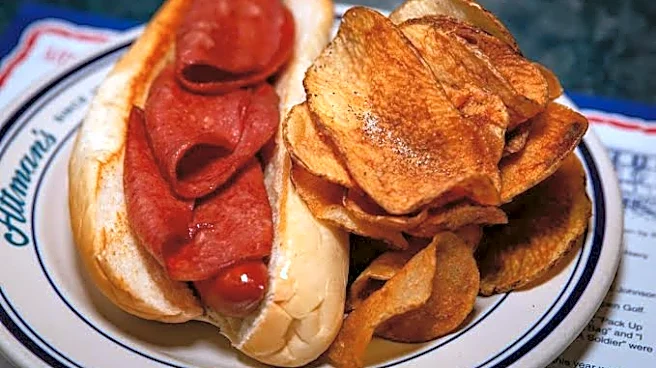
The Baltimore-style hot dog has emerged as a distinctive culinary creation in Maryland, gaining popularity among locals and visitors. This unique hot dog features a kosher all-beef sausage, split and fried, wrapped in thick slices of fried beef bologna,
and topped with raw onions, yellow mustard, and a pickle spear. Some variations include sweet relish, ketchup, or cheese. The origins of this hot dog trace back to the Great Depression, when Jewish delis in Baltimore's 'Corned Beef Row' sought to provide a hearty, affordable meal for working-class customers. The Baltimore-style hot dog became popular in the early 1940s and continues to be a local favorite despite its nutritional drawbacks.
Why It's Important?
The Baltimore-style hot dog exemplifies the adaptability and regional diversity of American cuisine. It reflects the ingenuity of local food culture, where traditional dishes are modified to suit local tastes and economic conditions. This hot dog not only represents a unique culinary tradition but also highlights the historical and cultural significance of food in shaping community identity. The continued popularity of the Baltimore-style hot dog underscores the importance of preserving regional food traditions in the face of globalization and homogenization of culinary practices.
What's Next?
As the Baltimore-style hot dog maintains its popularity, local delis and eateries continue to offer this unique dish, attracting both locals and tourists. The ongoing interest in regional foods may encourage other cities to explore and promote their own culinary traditions. Additionally, the story of the Baltimore-style hot dog could inspire food historians and cultural enthusiasts to delve deeper into the origins and evolution of regional dishes across the United States.
Beyond the Headlines
The Baltimore-style hot dog serves as a reminder of the economic and cultural factors that influence food innovation. Its creation during the Great Depression highlights how economic hardship can lead to culinary creativity, as communities adapt to limited resources. This dish also raises questions about the balance between preserving traditional foods and addressing modern health concerns, as it combines two of the least-healthful meats. The Baltimore-style hot dog thus invites a broader discussion on the role of food in cultural identity and community resilience.