






What's Happening?
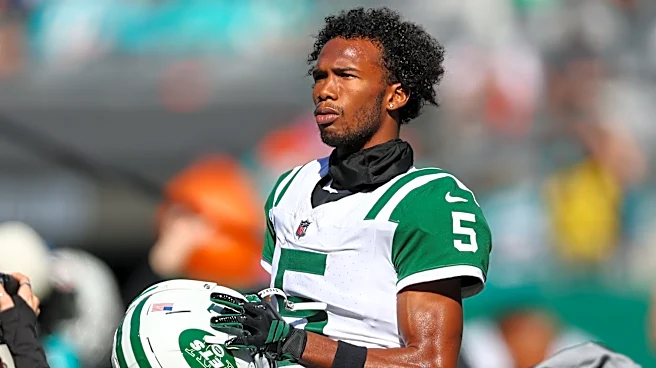
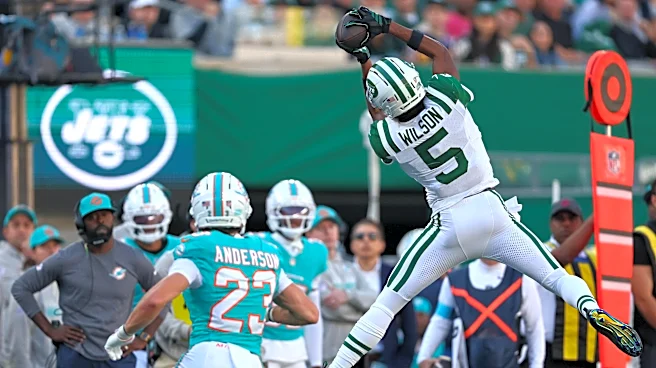
Star wide receiver Garrett Wilson has publicly stated his commitment to staying with the New York Jets, even as he voices significant frustration with the team's consistent losing record. Wilson, who signed a four-year, $130 million contract keeping him
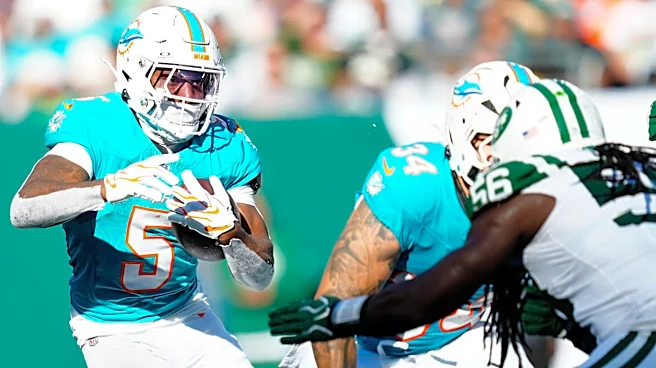
with the Jets through 2030, emphasized that his desire to win outweighs his personal preference for the city. His frustration became particularly noticeable during recent games, including a 28-25 loss to the Miami Dolphins, where he received only three targets. Since joining the Jets, the team has accumulated a 24-51 record, failing to achieve better than a 7-10 season. Despite these challenges, Wilson has made it clear he does not wish to be traded, aiming instead to contribute to the team's success in New York.
Why It's Important?
Garrett Wilson's public comments highlight the significant pressure and emotional toll that prolonged losing seasons can have on professional athletes, particularly those with high expectations and substantial contracts. His commitment to the Jets, despite his dissatisfaction with the team's performance, underscores the complex dynamics between player loyalty, contractual obligations, and the pursuit of competitive success in the NFL. For the Jets organization, retaining a talent like Wilson is crucial, especially given their 15-season playoff drought, the longest active streak in professional sports. His frustration, if unaddressed by improved team performance, could eventually impact team morale, player retention, and the organization's ability to attract future talent, potentially perpetuating their cycle of underperformance.
What's Next?
The immediate focus for the New York Jets will be to improve their on-field performance to alleviate the growing frustration among key players like Garrett Wilson. As the trade deadline approaches, the team will need to manage any potential trade rumors surrounding Wilson, reinforcing their commitment to him. The organization's ability to demonstrate a clear path to winning, whether through strategic coaching adjustments, player development, or future acquisitions, will be critical in maintaining Wilson's morale and long-term commitment. Failure to address the team's losing culture could lead to continued public expressions of discontent from players, potentially impacting fan engagement and the team's overall marketability.
Beyond the Headlines
Wilson's situation reflects a broader challenge in professional sports: balancing individual player ambition with team collective success. While his contract provides financial security, his desire for winning speaks to the intrinsic motivation that drives many elite athletes. This scenario also brings into focus the role of team management in fostering a winning environment and managing player expectations. The Jets' history of trading first-round talent, such as Quinnen Williams and Sauce Gardner, despite their recent contract extensions, adds a layer of uncertainty for any player, regardless of their stated loyalty. This creates a dynamic where even committed players might eventually reconsider their future if the team's trajectory does not improve, highlighting the transactional nature of modern professional sports.